 Written by
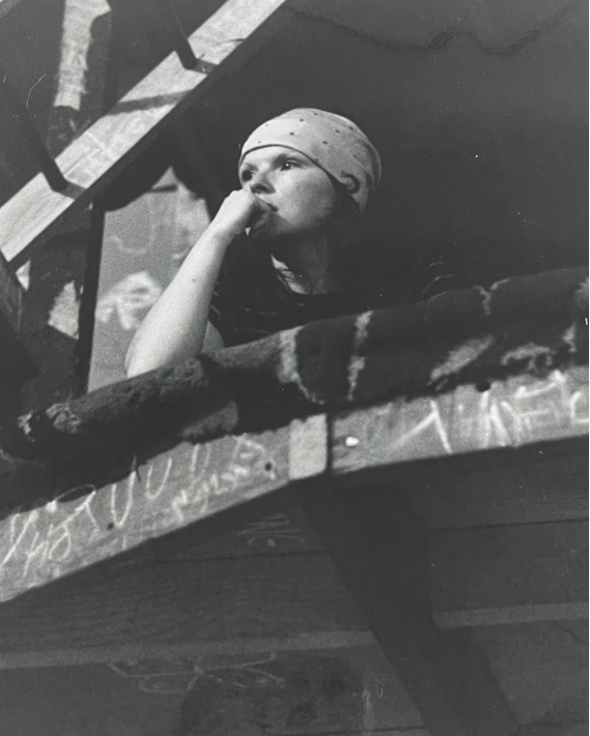
 Lila Gould, a curator based in Brooklyn, NY, is in conversation with Anne Healy (b. 1939; Fig. 1) about her career as a sculptor and educator, her photographs and documentation of her impermanent sculptures, often made of nylon spinnaker sailcloth, and how she defines public art and its ties to theater.
Gould curated the exhibition Anne Healy: Logic of Intuition at the Hessel Museum of Art, on view from April 4 through May 24, 2026.
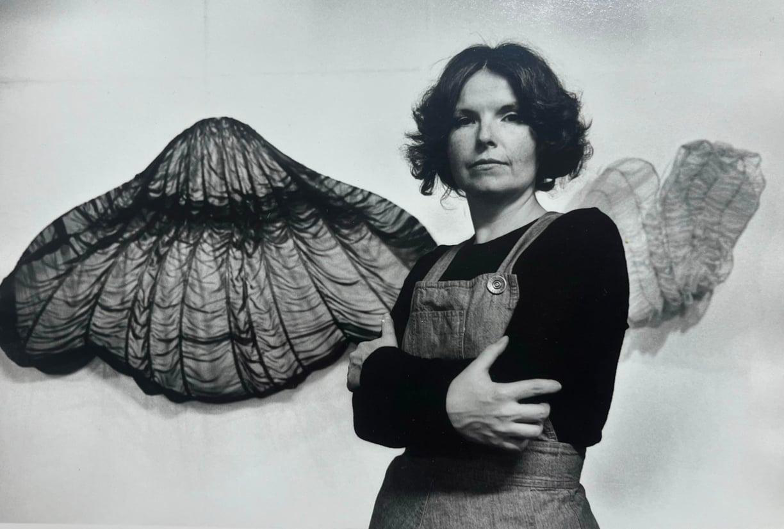
I first emailed Anne Healy in June 2025. I was in the midst of researching artists, performances, and exhibitions that occurred along the waterfront of the New York City harbor. I grew up in Brooklyn, on the lip of the East River, and felt compelled to engage with the local artists from the neighborhood. I was interested in working with artists who shared a similar interest in the history of the borough, and who created works that felt rooted in public engagement. The Brooklyn Bridge Event, organized in 1971 by curator Alanna Heiss, was a project that seemed most aligned with these values. In a project that has been described as “both the catalyst and model for a series of curatorial initiatives that would ultimately evolve into (MoMA) PS1”,[1] Brooklyn Bridge Event was an ambitious project and contemporary art experiment,[2] which featured dozens of prolific artists and sculptors including Gordon Matta-Clark, whose contribution was roasting a pig,[3] Carle Andre’s minimal installation, and Tina Girouard’s performance piece, Swept House, to name a few.[4] While hunched over a stack of documents pulled from the MoMA archives, I noticed various iterations and shorthands of the name Anne Healy recurring in the files, which ultimately led to the research for Logic of Intuition and the interview below.
Lila Gould (LG): My entry point into your work, Anne, was learning about the Brooklyn Bridge Event at MoMA PS1, in 1971. While researching this curatorial project, I noticed that you were listed as a contributing artist, but I could not find a ton of information detailing what you showed in the exhibition. Would you begin by discussing your participation in this event?
Anne Healy (AH): I don’t think there were many women artists who were involved in the Brooklyn Bridge Event. I did not really know curator Alana Heiss [b. 1943], but somehow I was in it. Somebody gave me a call and said, “Do you want to do something on the Brooklyn Bridge?” and I said, “Sure!” Alana gave me the name of the person I was meant to contact, and I did, and he met me on the Manhattan Bridge. He said he wanted to show me the condition of these bridges, so we were walking along the Manhattan Bridge, and it was in terrible shape. The Brooklyn Bridge had so much more fame and people paid and contributed money for its upkeep.
LG: Wow!
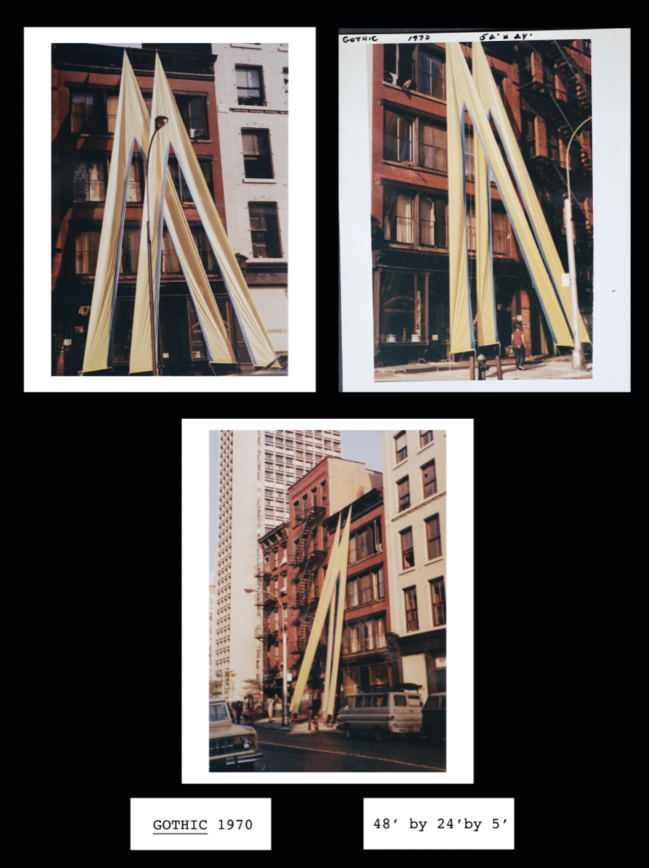
AH: I don’t think people cared about the Manhattan Bridge. I mean, he [my contact] could put his fist in the holes that were in the iron beams of the bridge! I was shocked. And he said, “I can’t get any money for this bridge!” Anyway, we went over the Brooklyn Bridge, and I showed him pictures of my sculpture, Gothic (Fig. 2), and what I was going to do. We looked at the arches and it was a very simple installation! It was three points of attachment, really. And he said, “Yeah we can do that.” He had the painters, who painted the Brooklyn Bridge, and they were always running cables up along the sides and everything. You’ve probably seen photographs of that.
LG: Can you walk us through the installation process and describe what the day was like?
AH: It was a Friday morning, and I met them all down there, I think by myself. Richard [Synek; Healy’s ex-husband] was not there (we had the business then), and I think he was at the business, so it was just me and the crew. It went up very quickly!
LG: Was Gothic installed between the arches of the Brooklyn Bridge?
AH: Yes. It went in between the two arches on the Manhattan side, not the Brooklyn side; you know, there’s an entrance there. We finished late in the afternoon, and I went home and Deirdre [Healy’s daughter] was back from school; Richard was home, too. Richard and I were going out to Chinatown for dinner, and while we ate, he said, “Let’s get a cab and let’s take some shots of Gothic at night,” and I said, “Great.” We were in the cab and saw that the piece had dropped five to seven feet down, and it was hanging right where the cars passed. But it was not loose, just dropping. The wind was so strong that the rope stretched, and we had not pre-stretched it. We never had problems like that, because we did not have that kind of wind. We came home, and I remembered that the man [the producer] lived in Connecticut. I had his name, called Connecticut Information, and said, “I have to get in contact with this man! He works for the City of New York,” and I got his phone number. All I had was his name and that he lives in Connecticut. The first thing he said was, “How the hell did you find me?” And I told him what happened, that we had to take it down. It was not damaged, but the piece was not in the show.
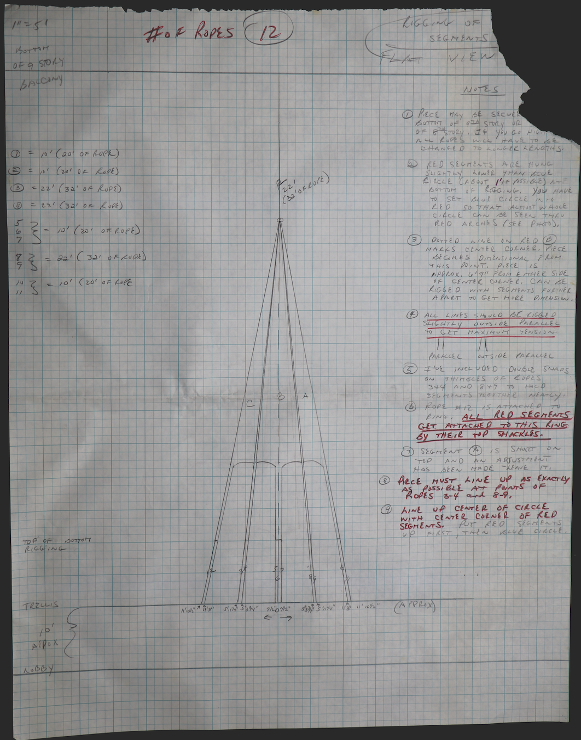
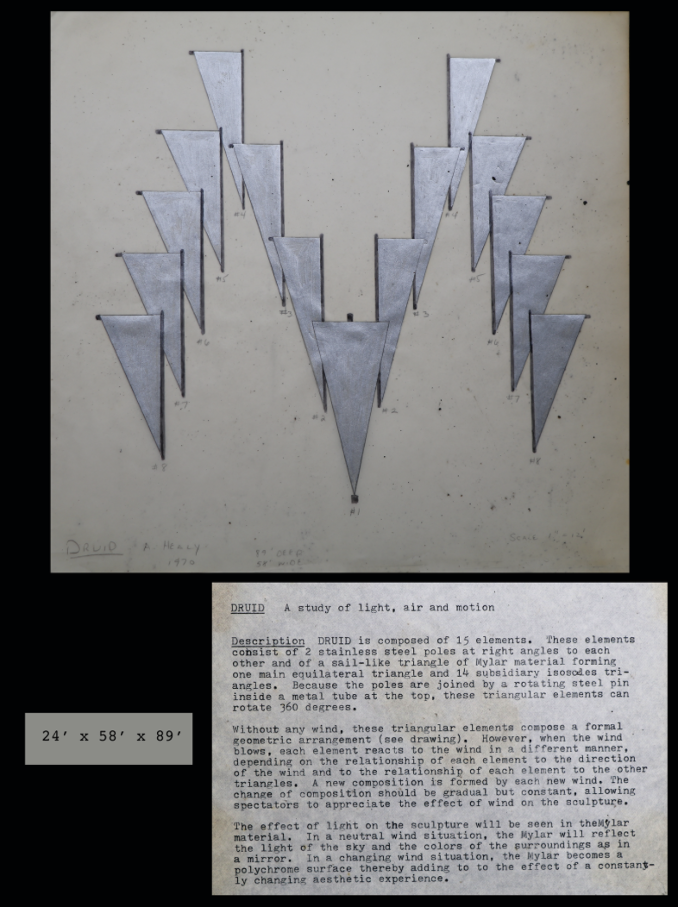
[This story perfectly encapsulated for me the nature of Healy’s work, which is in big part improvisational. Healy’s outdoor pieces were often made from colorful nylon spinnaker sailcloth, glued and sewn into massive sculptures. Published in the Women Artists Newsletter in 1976, Healy contributed a piece of writing titled “Some things about cloth, wind, exorcism, mystery, large birds, pajamas, and Art.” Healy read parts of this text out loud on a panel she was invited to join the following year titled “Pluralism, feminism and all” in New York City. The talk was moderated by painter Lucy Sallick and photographer Judy Seigel, and alongside Healy were artists: Lila Katzen, Cynthia Mailman and Alexandra Penney.[5]On that panel, Healy articulated her interest in working primarily with cloth: “My strongest influences have been from everyday objects and ordinary experiences. Flags on sunny days, dusty drapes, curtains at night with the street lights behind them … dresses rustling as I move, the marvelous, wonderful, sensuous feeling of wearing a silk slip, the hypnotic movement of sails.”[6]Healy’s large outdoor sculptures are prone to unforeseen circumstances, such as weather conditions, and are often accompanied by pages of detailed notes about the installation handwritten by her alongside scale models and research, necessary to ensure that the sail sculptures are displayed with just the right amount of tension to stay taut (Fig. 4).]
LG: Tell me about how you began to use sailcloth in your practice? How did that come to be?
AH: That intrigued me. And that’s why I started to work with the sails, the concept of the sails. I was watching friends work with velvet. I had a business with Richard who manufactured chess sets and boards. He had a template and made Styrofoam boards that we would put the velvet over and put the pieces in there. I found a piece of mylar, and I was playing with it, and Richard and his friend went across the street, and they let the wind catch it. And everyone was excited! We also did some sailing with those who had a boat (Fig. 3).
LG: What was the first piece you made out of sailcloth?
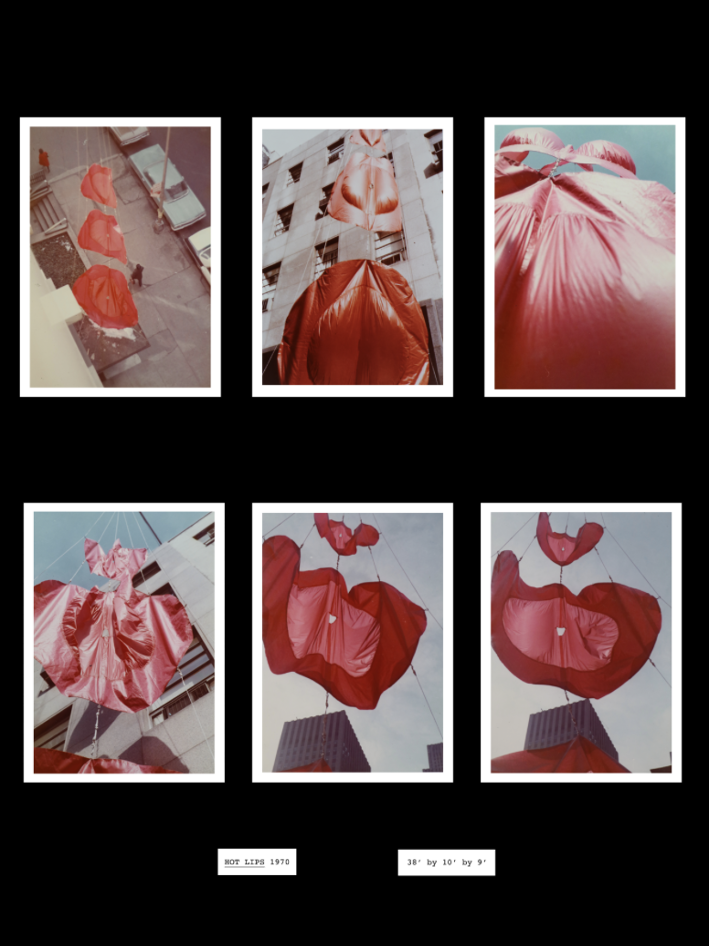
AH: I made the sketch for Two to One (1968) (see Fig. 5), and I made it for that building [on West Broadway], so all the pieces were about that size. And then, I think I made Hot Lips (see Fig. 7)there too! I can’t believe it.
LG: Both your outdoor and indoor installations utilize scale and volume to immerse the viewer into the pieces. Anne, our shared background and love for theater is one of the first things we had in common. What is it that you love about theater?
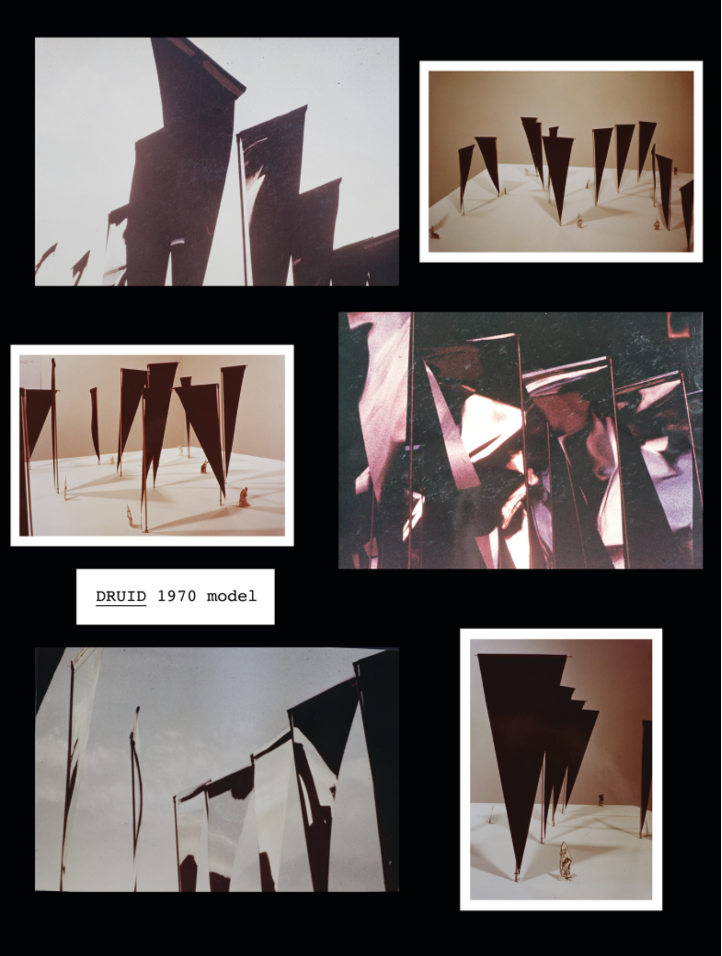
AH: Ilove the size of it, and I love to make models. I made a model for a play, He Who Got Slapped (Leonid Andreyev),but I love the light and shadow. It was an empty space, and you could make it anyway and anything you wanted (Fig. 5 and Fig. 6).
LG: Can you tell me about how you got into theater? Did you study it in college?
AH: Yes, I was a double major at Queens College in English Literature and Theater. I took set design and technical theater classes, and a lot of theatre history courses. I started in the theater; I guess I went to audition! I had this little squeaky voice, someone made fun of me … must have been one of the boys! So, I was interested in lighting, and I ended up doing the manual lighting for a production of the Glass Menagerie (1944) by Tennessee Williams. The director was staging it with a lot of blackouts and lightning cues, and I would do them manually on the board (with your hands). And I loved it. I like to do things like that: to knit, well, I don’t do that much anymore, but I like to make things; with this, it felt like you made the light with your hands and fingers. And [Glass Menagerie] is a two-and-a-half-hour show.
LG: I love that play so much! In Glass Menagerie, it is so important to have excellent lighting to catch all the details of the props on stage.
AH: Yeah, and the kind of lights are important too—the kind of lights, range, and colored gels. That’s how I think I got into the sailcloth, because the sailcloth had colors like the gels. I would overlay two different colors. If I wanted purple, I would overlay red and blue. You could make shades with the sailcloth, but you need the sunlight to come through.
LG: How did your love for theater continue throughout college?
AH: I got my degree, saying goodbye to a professor, and he said, “I know this person, and he is looking for someone to work with him,” but he did not tell me who it was. I put the name in my bag, and you know time passes, and one day I opened it up and it was Joseph Papp (Founder of the Public Theatre)!
LG: Wow!
AH: And I never went! I was so embarrassed. Who wouldn’t want to work with Joseph Papp?! I was always interested in theater but did not feel confident in myself at that point. I was in a couple of productions when I worked at UC Berkeley.
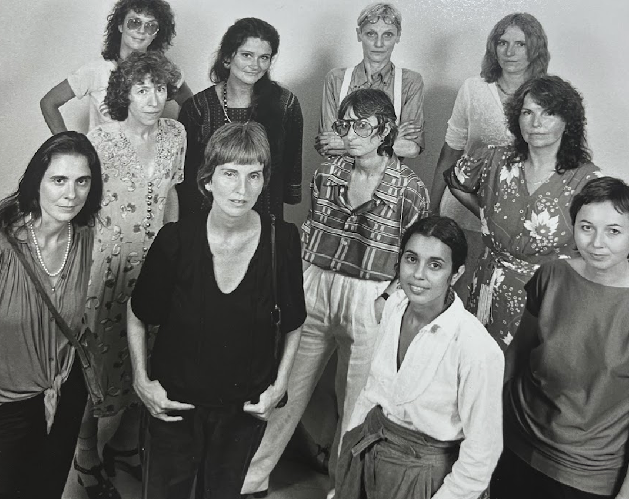
LG: Anne, after you graduated college, you started working at A.I.R. Gallery, the longest-running women artist cooperative gallery in the United States, as a founding member in 1972 (Fig. 7). How did you get to know the other members of the group and become a part of it?
AH: Well, I was showing the pieces outside of my loft on 471 West Broadway, so the building was three stories tall, and I was showing my work—Two to One (Fig. 8)and Gothic—I think, those are the only two ones I ever showed there,on Saturday afternoons. It was all day on Saturdays, but mainly the mornings.
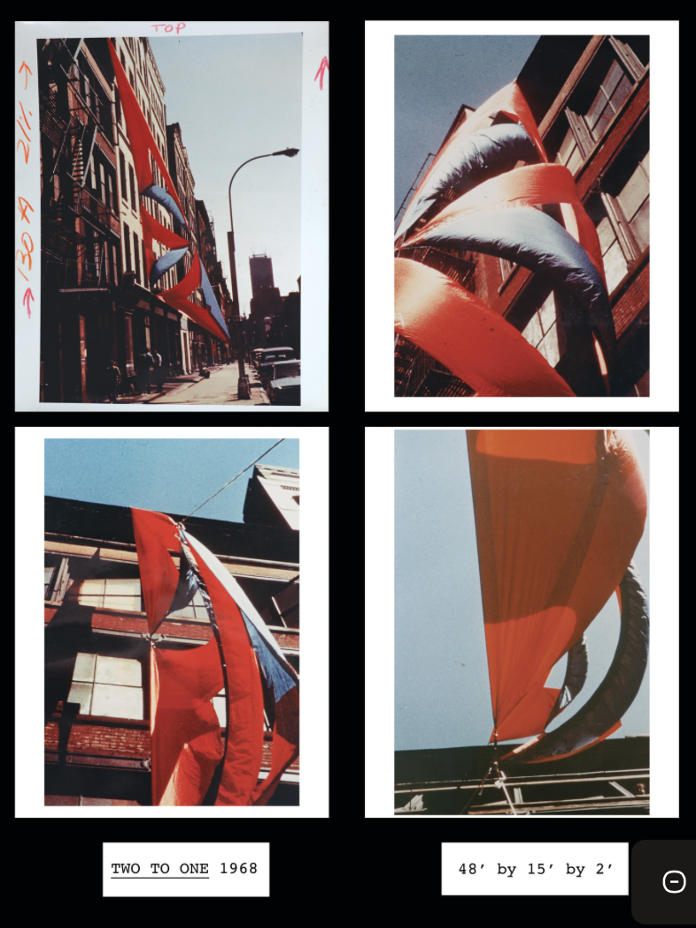
I didn’t know anybody. I had a background in theater and I wasn’t involved with theatre at all. I did that piece for the Wooster Street Group [Two to One)], I had the piece made, but I put it in a different configuration: instead of vertical it was diagonal and hung across the street (Fig 9).
There was no money involved; it must have been in the beginning. It was hidden away. There was a big empty space in the front. I was still interested in theater. So, on Bleecker Street, the Bleecker Street Theater had an upstairs loft where they gave me impromptu lessons. I don’t think I went more than once! But I was sitting there, with actor Peter Boyle, who was in the group, and another woman, [sculptor] Barbara Zucker [b. 1940]. We chatted between improvs, and I told her about my sail sculptures, how I used to live on West Broadway, which is pretty close to here, down on the other side of Houston, and how I used to show them on Saturdays. She then turned to me and said, “I have been looking for you, but you moved!”
LG: And by this time, you were living at the Coogan Building on West 26th Street?
AH: Yes! And she told me about A.I.R. Gallery, but nothing had yet been finalized. She said, “I’m with two other artists, and we have been going around and looking at work and getting artists to join.” So, it was, Suzanne Williams [b. 1942], Dotty Attie [b. 1938], and Barbara, and they came to my big loft in the Coogan Building. At 471, I had two big tables and a little sewing machine, and I made two big pieces there. When you want to do something, you do it! I don’t know how I did it, but I did. Dotty wrote to me and said she was excited when she walked in and saw my work. She is so sweet.
LG: Did you admire their practices before you worked alongside them?
AH: I didn’t know any of them. I was not interested in art at that point. I was into my work and into art history. I loved art history. I had minored in art history and philosophy. I got my money’s worth out of Queens [College]. I almost became an art historian. Dorothy Eisenberg was a wonderful professor; she made things come alive! That was what hooked me. We had to take a semester of art history. The first thing that she did was on Hagia Sophia [sixth-century Byzantine cathedral turned mosque, in Istanbul, Turkey], and she had a few slides, but she interspersed them with photos she had taken, and it was like you were there with her. She was great at lecturing and describing. I got good grades, and she was very interested in me and wanted me to become an art historian.
LG: You mentioned your connection to theater and your work with sailcloth. How do you define public art and its connection to theater?
AH: I think that public art is a form of theater not because it’s public art, but because it’s made and done on the street, and the audience is there with you all the whole time; they are passing by or standing with you making comments, having a giggle fit, or just curious. So, you bring the audience and the actor, [the artist], in communication, even closer than in a theater, because there’s always the distance between the stage and audience. However, with art that is in the public, because the artist is in the public too, there’s no distance. You’re right there with it. As I’ve heard, one definition of public art is that it is made with public money, which is also true, but I think my definition is closer to what actually happens. The stage of the set. The audience is there. The actor is ready, the artist and the play begins.
LG: Beautiful! That is something I’ve really noticed, and I’ve been attracted to in your practice, how you talk about the public and their engagement. I observe these characteristics present in your site-specific works (Fig. 10). Would you mind talking about your practice and site-specificity?
AH: Well, yes, as an artist you don’t always have the opportunity of being in a space that is particularly specific to what you want to do. But, if you’re very lucky, you can find a space, you can find the space. It’s not a commission given to you by somebody. You select the space, because in that space you’re not only finding the physical characteristics that you’re interested in, but you also find spiritual characteristics that prompt you. When you are in a space, it may bring back a memory. This might be a memory of having a laugh because you remembered something, or it might be a memory of something that happened in these spaces. Having these memories in space is ideal. However, as I said, with most public art the spaces are selected for you, and you have to work within those parameters, and you do the best you can. But try to find some of those spiritual connections that you remember in space.
LG: Can you talk to us about your favorite US commissions that used air, color, and sailcloth?
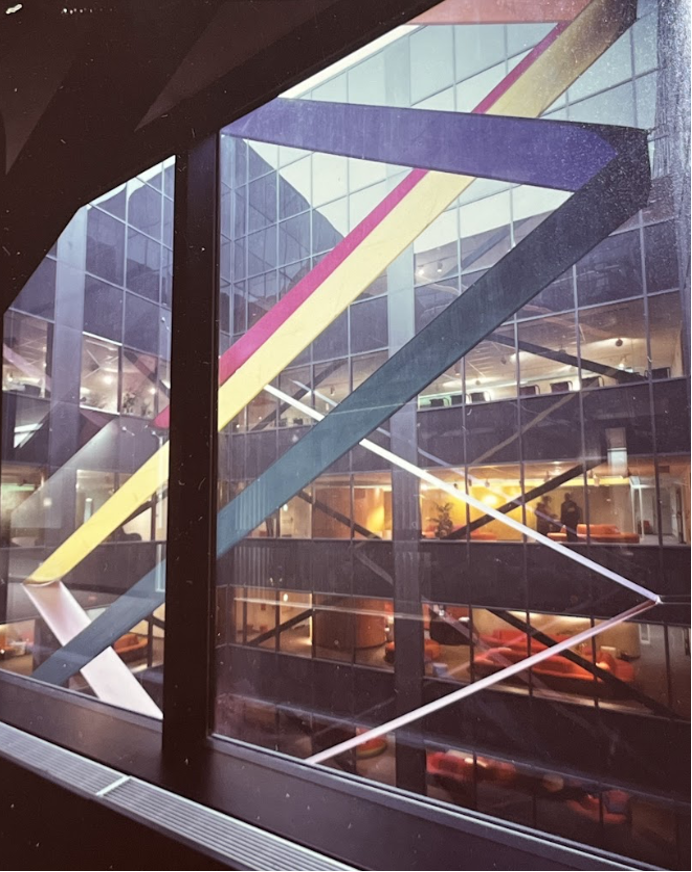
AH: I liked the Detroit piece, Color Cross Section (Fig. 11).The hospital had an interior courtyard space, which went from floor-to-floor outside each of the windows. Well, you can see it in the pictures. And part of it passed the children’s clinic, so the kids loved it. And it was up there for a long weekend. It went very easily.
LG: Oh, good!
AH: And the architect of the building was there with me. That was really my last work from the 1970s.
LG: In some of your works, you would sew two different colors of sailcloth together, one on each side. Was this piece double sided?
AH: Yes, double sided of different colors. The spinnaker sailcloth was so thin that you would get a nice translucency from the light.
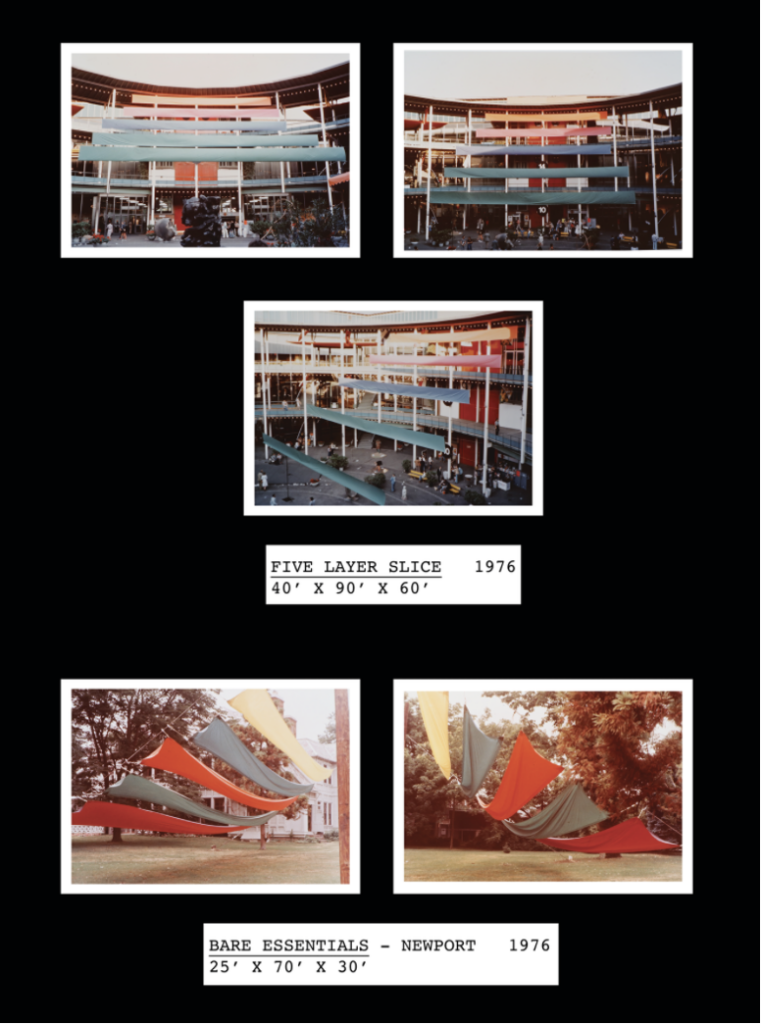
LG: I’ve noticed most of your prints are stored in huge black bound albums. Hundreds of pictures of your sculptures are glued onto dark construction paper and protected by a thin layer of plastic. All images are accompanied by handwriting along the border of the prints, on the back of them, or with cut-out strips pasted from a typewriter—always providing the title, date, location, and dimensions. Would you mind discussing a little bit about how you documented all your sculptures, what time of day, and why? Why was taking a lot of pictures at different angles important to preserving the work?
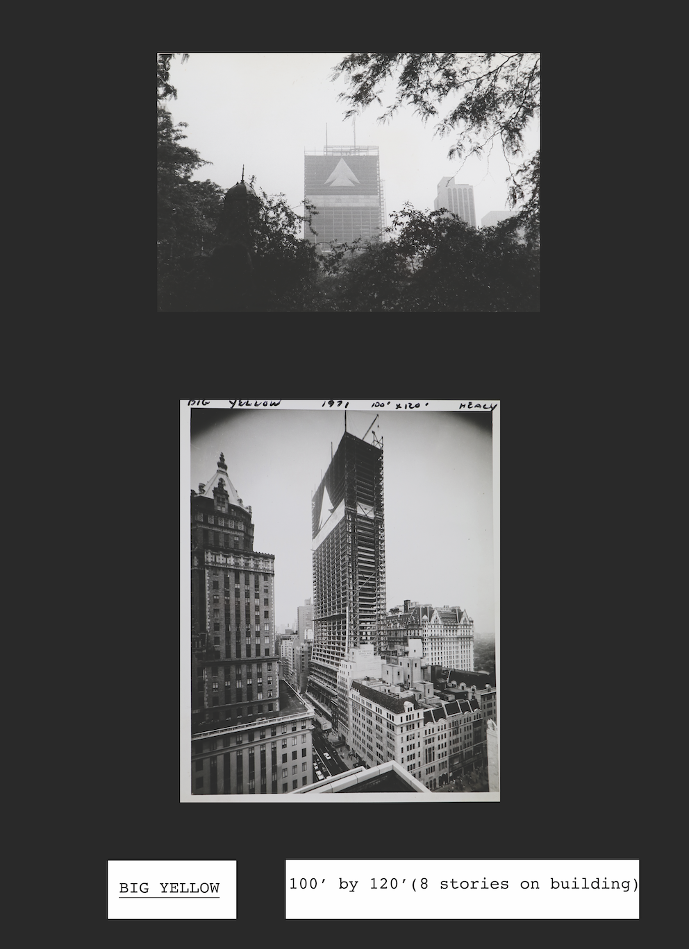
AH: Well, I realized early on that no one is ever going to see my work like I did. I could have had very interesting photographers take pictures, but then they very rarely did what I wanted. So, I decided to do my own photography. And I like photography anyway. I especially like black-and-white photography to tell the truth, and at that point you know, in the early ʼ70s, there were not a lot of color prints. I mean, I really did a lot of black-and-white work. With the pieces, even the very colorful pieces, I also did color because I would go back, not that often, at different times of day and on different kinds of days, you know, very bright and sunny, or cloudy. Once in a while, I photographed the works in the rain, but not very often. Because I could see how the piece changed with different kinds of lighting. I wanted to show other people how the sculpture changed according to the light quality, and photographers have different interests in what they want to and hope to capture. This was my interest and I happen to be a photographer. So, I gave it the time and the thought and also it was luck! You know, a lot of photography is based on luck. You happen to be there at the right moment, at the right day. And it works! So that is why I decided to do my own photography (Fig. 12).
LG: What do you like so much about black and white photography? Was it the shadows?
AH: Yeah, it’s the shadow. You don’t get shadows in color photography. I mean you do, but it’s not as striking. You know, I’m a big noir fan, film noir, and I grew up watching those movies, and noir is all about shadows and darkness and that’s why it is called “noir”. That interests me, and it still does, and I could find it in the black and white photography, but I couldn’t find it in the color photography. I mean, color has other qualities that are very important. Equally important, I did a lot of color work, I mean my work is color. It is really based on color and light and shadow. But I just always liked the black and white because it is much more dramatic, and that’s what I was always going for, drama (Fig. 13).
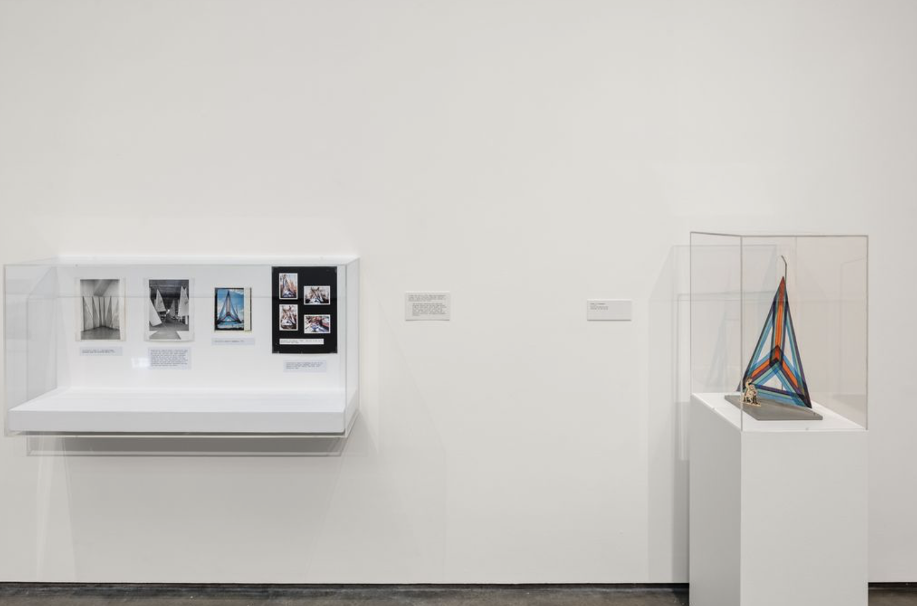
LG: I love that about your work. I think that it also really translates well into the indoor pieces in your practice. Like Motet, the freestanding chiffon sculpture, and Georgia, the chiffon sculpture that is secured directly to the wall, which are currently on view at the Hessel Museum of Art (Fig. 14). We have talked a lot about theater, but there are also a lot of musical influences in your work. We’ve talked about the composer Philip Glass before, and past performances you’ve seen of his. Can you tell us a little bit about your indoor works named after elements in music?
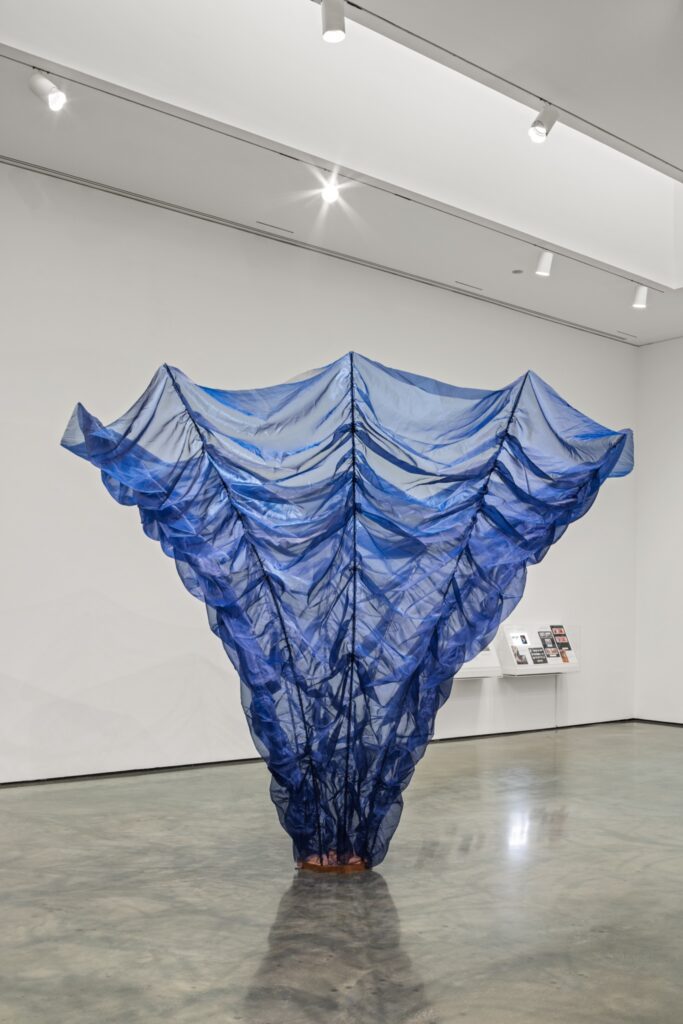
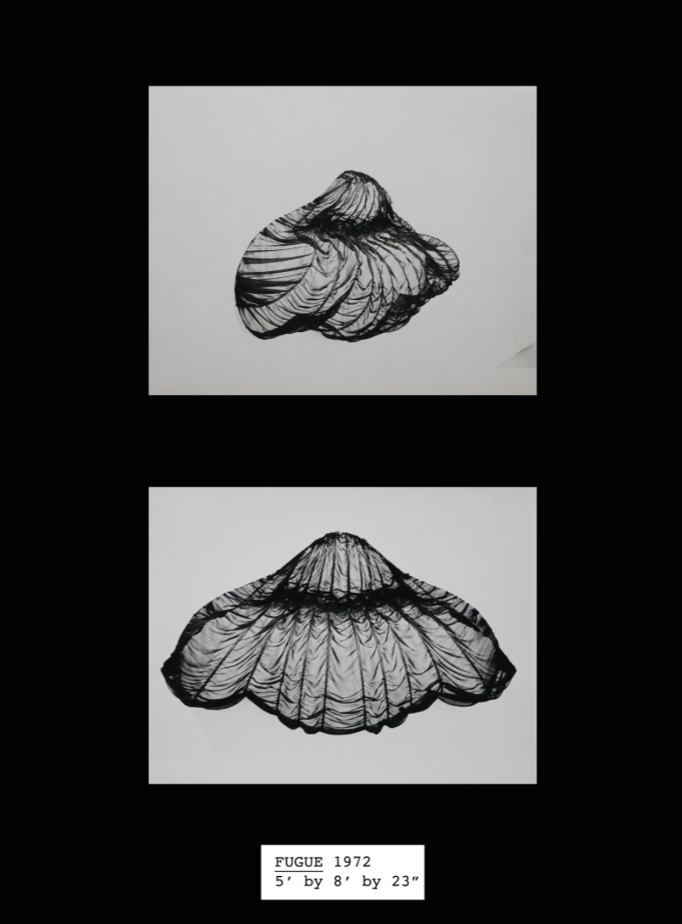
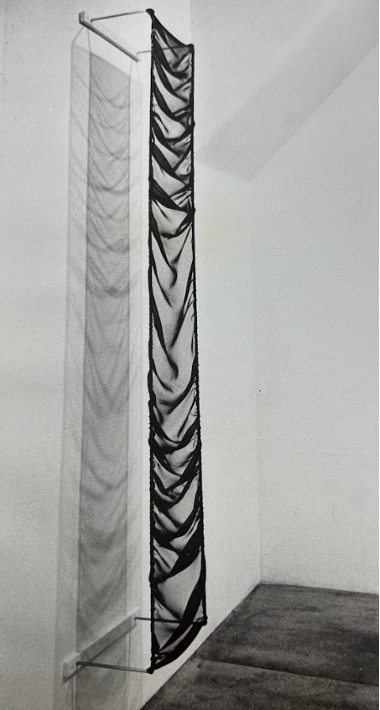
AH: I like baroque music and the choirs. Fugue (Fig. 15)and Motet are named after them. This was later, in 1974 to 1975, and when I made Fugue, it was based on a medieval headdress for women. Then I started to use chiffon and light, and with Premise (Fig. 12), that was it! It’s the shadows that got me hooked on the concept. Every piece had something with making shadows, and I used rods.
LG: For your recent exhibition that I curated, Anne Healy: Logic of Intuition, at the Hessel Museum of Art, Bard College, we spent a lot of time during the installation period perfecting how the ceiling lighting casts shadows on the floor. Another work, not displayed in the exhibition, is a piece from the mid-1970s titled, Premise, which marks the beginning of how you thought about incorporating shadow into your indoor works. Premise is constructed similarly to both Motet and Georgia (see Fig.16), which use chiffon and aluminum rods. However, Premise is a strip of chiffon secured on either side by aluminum bars, on the top and bottom, placed directly on the wall. What was so exciting about using shadows in your sculptures? (Fig. 17)
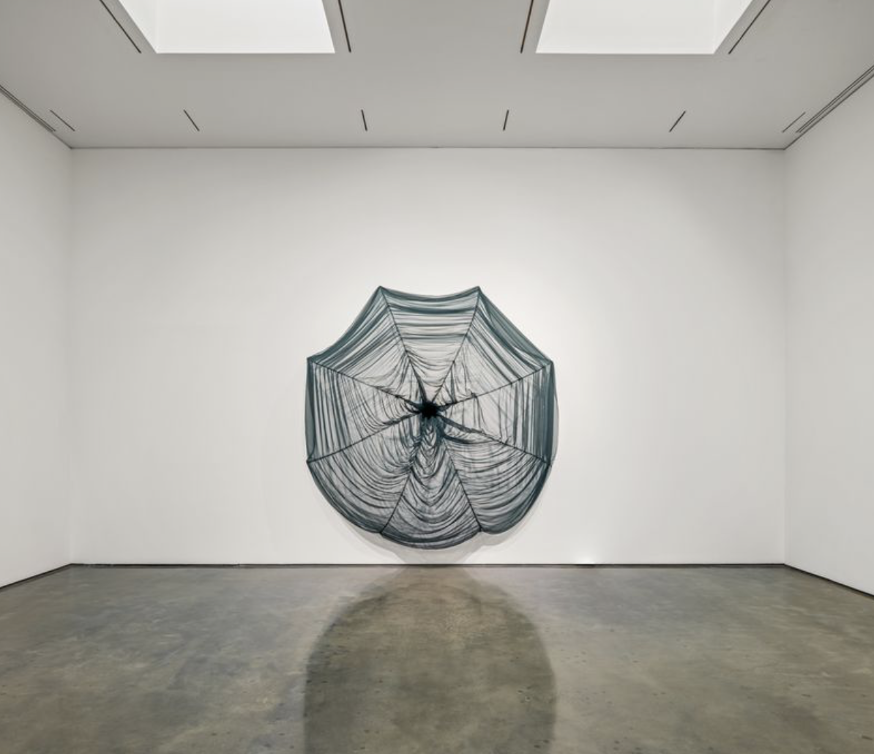
AH: Yeah! Because you have the actual piece and the shadow piece on the wall behind it that is just as valid and interesting as the cloth piece.
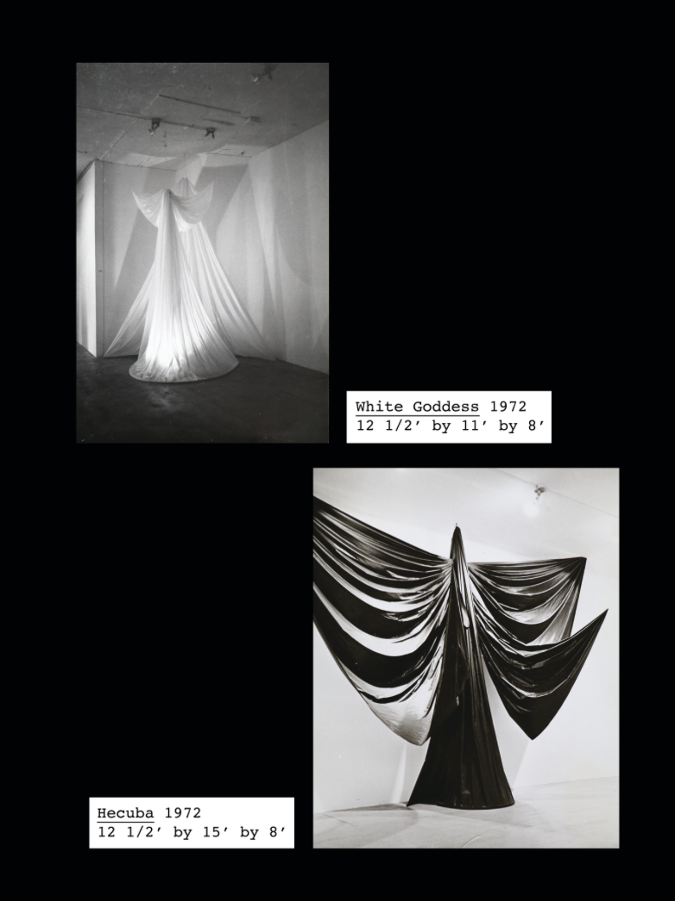
That was something I really started to work on from the beginning, it was always about that. And sometimes I would put lights in pieces. I did a piece called the White Goddess (Fig. 18) which has a light in it that you don’t see, but it makes this beautiful medley of light and shadow on the white fabric. It does kind of look like it’s walking in a strange way.
LG: Yes! Your works always demonstrate how beautifully you use scale. It seems like you are always very considerate and aware how people both approach and experience your work. Can you tell us a little bit more about how this intention becomes clear in your public sculptures?
AH: That’s another thing about public art. You can direct people to experience the work in the way you want them to. I did a piece in Philadelphia in the 1970s where I put up white fabric screening panels, and I had big yellow x’s on them. I put it up at the entrance of the Philadelphia Academy of Art, where they had these huge, beautiful columns—at first steps, then you had to go through the columns, then you entered through a tiny little door going into the museum. I put up barriers between the columns, so you had to squeeze in at the end of the colonnade, on either end, and then squeeze in to go through this tiny door. I was referencing what was displayed on buildings the city was destroying in Manhattan in the 1970s (they did this a fair amount); they would put up these big pieces of fabric that had big x’s on them. The fabric I was using was more like a mesh, so you could see through it; you saw shapes and people, but they were not as distinct as what you would normally see. The whole piece had an air of frustration, being enclosed by something you did not particularly want to be enclosed by, and also being reduced to this tiny little door to enter this big, big building. I could direct people how to experience the piece, they had to go along the ends. Of course, some of the students decided to squeeze through the barriers, one or two, and luckily the piece held up (Fig. 19).
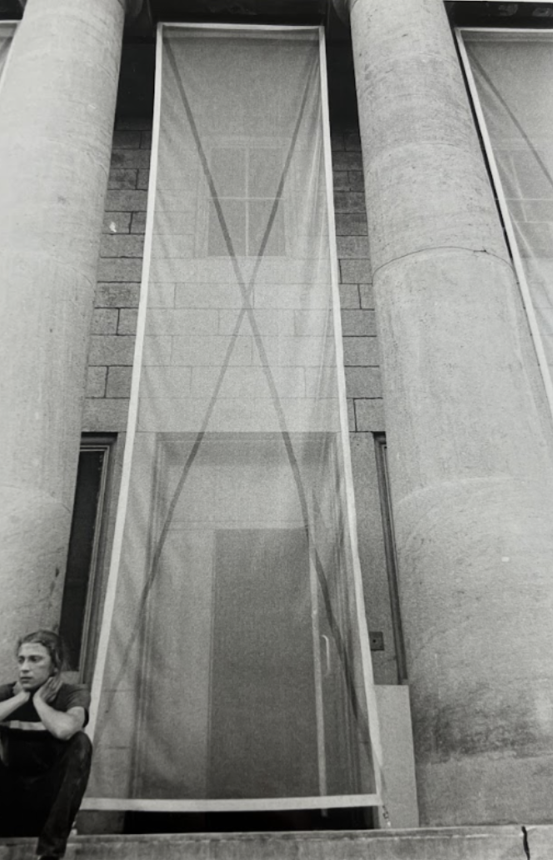
LG: I remember, when we looked through your photos together in your studio, you would look through the ones where students were going in between [the barriers and columns].It was interesting to see and hear what you witnessed watching students and faculty navigate the entrance to the Academy, now that your sculpture, Transparent Detour, was on view, and how they would adjust their bodies accordingly to access the building.
AH: Yes, it was very interesting. I did not think anyone would do that! They also had planters up there.
LG: And it being both a museum and school was quite fascinating, and all the steps leading up to the piece have this dual purpose of being an entrance to a museum and school but also being a place where people can hang out.
AH: I removed a lot of the hangout, because it was not available to them anymore. But I think the students enjoyed it, and I enjoyed doing it.
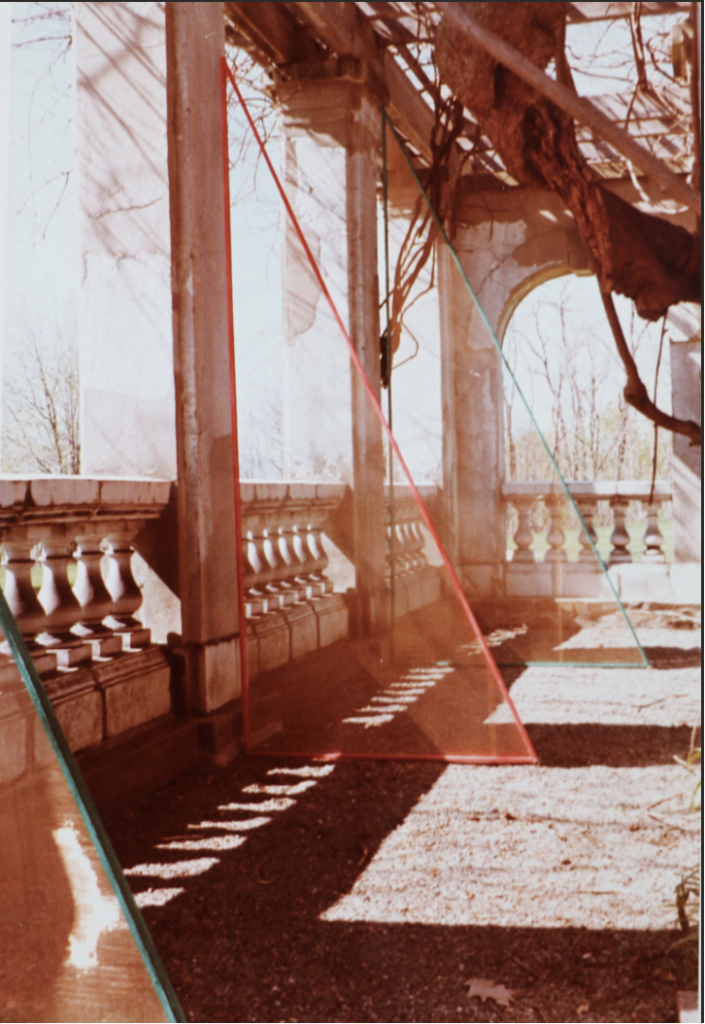
LG: Your work continued not only teaching sculpture but also creating site-specific installations on the facades of museums and art schools. As reflected in our exhibition, Logic of Intuition, I was really excited when we discussed a project you made specifically for a spot on Bard’s campus at Blithewood Garden, which you made in 1978, titled A Parthian Shot (Fig. 20).Would you mind talking to us about this project?
AH: Well, the space for A Parthian Shot was offered to me by Bard College in 1978. I had walked into the space, and I just fell in love with it. Basically, there are actually two kinds of colonnades facing each other across an empty workspace. When I did the piece there was a huge concrete planter that was in the middle of that walk space, so you had to walk around that, which I found very interesting. The colonnade is ending or beginning with arches. When I stood in the walk space, near the big pot, I could look either way, and I would see the same thing. So, what I wanted to do was to bisect or dissect the column, the arch space at the end of the colonnade with triangles of very thin molding, wood molding that I painted different colors, also different sizes. They started small. The angle of the first triangle cut into the next triangle, which cut into the biggest one towards the end and then finally cut into the arch. Anyway, visually, that’s how it worked for me. For the material that I used, I didn’t want to use anything that was definite. So, I used brass wire screening that had a glow because it was brass and it was also patinated and set in these right angles that were made by the wood molding painted into different colors. I love that piece. I named it A Parthian Shot in reference to a maneuver by the Parthian army. The Calvary would pretend to be forging ahead on horses and then would make an abrupt turn and come charging back at the opposite army. They feigned retreat, turned into a charge, and that’s how the piece felt to me. Because of the way it all turned out. I was very pleased with it; I love the piece. I’ve shown it in slides, at various occasions of lectures and things like that, and none of these people ever saw the piece, but everybody really got it. That really has always made me feel wonderful.
LG: It’s like an optical illusion. The material is really striking, and seeing it in succession with the others, too. It does something visually, and it really responds well to the space.
AH: Well, you know the material. The color picks up, but it’s also dependent on the light that’s coming into the colonnade, so sometimes part of it will be in shadow, and the other part will be lit, and when the brass wire screening is lit, it flares in this yellow, and when it’s not lit, it dulls down, and then, of course, because it patinated over time, so that made it dark and you had a lot of things going on with very very minimum materials.
LG: Can you talk to us about a few of the courses you taught at UC Berkeley?
AH: When I went out to Berkeley, I developed a class called “Class Specific Sculpture,” and I took the concept to the head of grounds, this older man, who loved the grounds of Berkeley. He was in charge of them, and my dean had told me that we had to get his permission to do anything, because I was planning to have students select sites on campus that they found not only physical attributes that they liked, but also had a feeling of memory, excitement, and other emotions that the site evoked in them. I went to see this man, and he loved the idea. He loved it! The dean was the dean, but this [other] guy had much more power, and once he got behind it, you know I wrote it up and I sent it; this is my first semester there! Because he “okayed” it, they “okayed it.” It became a course in Berkeley’s Department of Art Practice, and it was not just for art students, it was open for the entire student body. I would have students majoring in English, lots of architecture students, sciences, a real cross section of the student body. I required them to first select a site. Then, the class would all go together to see each site, and they had to tell us why they selected this site; then they were expected to do a construction drawing showing how whatever they were going to make would be made, how it would be installed, hardware, and everything. Then, they had to do another drawing, which was the beauty spot. How they saw the piece in its best definition in that space. They could use any medium they wanted. Then they had to make a model, a three-dimensional model. With the completion of models and drawings, and everything, we discussed them in class. I had a presentation date from twelve to one p.m., and supposedly it would always run over, until at least one thirty. I would invite the head of grounds, who changed. The first man retired after the first couple of years, he was a wonderful guy! The students had to stand up and present their work: how they felt about it; why they did this; how they were going to construct it; and take feedback from these various people and basically defend the work. Also, because the grounds were there, they were getting help from the grounds people. “Ok! You can use this site…. We might plant something here…. What do you need?” The grounds people provided shovels, anything the students needed to make the piece work in the ground, including a lot of suggestions for these kids! I mean, they were kids, learning, “You can’t do this because that’s not going to work there!” The presentations were a big part of what I was doing in the class. It gave them the confidence to make their own decisions, and that’s what it was all about.
LG: Beautiful! Thank you for sharing your work in general and your practice as an educator, and how you engaged with students of all ages and different capacities and different backgrounds. It is really important and a big part of who you are and what we discussed. I appreciate it.
AH: Well, thank you, and thank you for doing this.
[1] Jonathan Lin, “1970s: Founding of the Anti-Museum,” MoMA PS1: A History, ed. Klaus Biesenbach and Bettina Funcke (The Museum of Modern Art, 2019), 10.
[2] Ibid, 29
[3] Ibid, 10.
[4] Andrea Andersson and Jordan Amirkhani, eds., Tina Girouard: SIGN-IN (Rivers Institute for Contemporary Art & Thought and Dancing Foxes Press), 62.
[5] Ibid.
[6] Pluralism, Feminism, Politics and Art, May 13, 1977, Artists Talk on Art Records, sound cassette, 1:43, Archives of American Art, Smithsonian Institution, https://www.aaa.si.edu/collections/items/detail/pluralism-feminism-politics-and-art-22076.