 Written by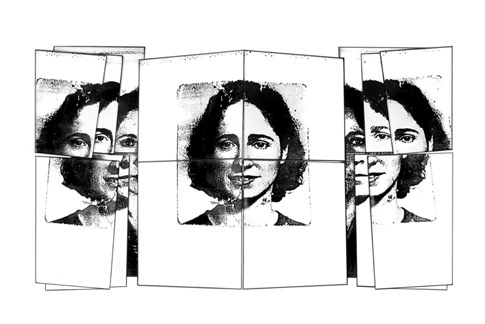
Art historian Cristina Albu conducts a conversation with Sandra Llano-Mejía (b. 1951, Cali, Colombia) about her innovative use of biosignals as an art medium and her resistance to technological determinism (Fig.1).
Cristina Albu (CA): I was fascinated to discover your artworks involving the modulation of heart and brainwave rhythms, which still remain little known in the United States even though you have been doing creative work in New York City since the 1990s. Your art practice has developed across multiple cultural spaces. You initially planned on attending art courses at the Instituto de Bellas Artes of Cali (Colombia) in 1968, but eventually moved to Mexico City in 1972 to study art at the Universidad Nacional Autónoma de México. What were some of the main differences between studio art programs offered at these institutions in South America at the time? How did your views on art change as a result of your decision to join an art program in another country?
Sandra Llano-Mejía (SLM):At the Instituto of Bellas Artes in Cali, Colombia, I wanted to learn how to draw the human body. They didn´t allow me to join the figure drawing classes because I was a minor and I was not permitted to observe nude models. In the early 1970s, many people of my generation traveled a lot. I traveled through South and Central America by land on my way to Mexico City. It was a unique experience which gave me the chance to see the vestiges of the Inca civilization in Peru and the Maya civilization in Central and South Mexico. I keep a lot of things from that period of time: I have a collection of huipiles, embroidered women’s blouses.
Once I arrived in Mexico City, I was in awe of the Aztec temples. They gave me a different view on culture from the one I had in Colombia where Native communities were more disparate and did not establish empires. I was fascinated with the history of all these cultures. My goal was to gain admission to the newly founded visual arts program at the University of Mexico City. I didn’t want to study plastic arts, which was the only option in South America, specifically in Colombia.
It wasn’t easy and I had high expectations. The school syllabus still leaned heavily towards painting; Mexico has such a great tradition in muralism, and there was a lot of emphasis on that. I envisioned art possibilities beyond this. I found a classmate, Humberto Jardón, who was on the same path, and we began to face adversities together. We followed conceptualist movements, especially from the USA, and thinkers and artists like Gillo Dorfles, Marshall McLuhan, Umberto Eco, Marcel Duchamp, John Cage, Joseph Kosuth, Merce Cunningham, Robert Rauschenberg. We were also intrigued by the Dada movement.
I ended up studying circuits, cybernetics, and logic instead of painting. Rather than focus solely on developing my art history knowledge, I delved into semiotics and sociology of art. Being open to ideas from other fields consolidated my understanding of art as a conceptual practice in dialogue with science and technology. I saw myself as a creator-artist who can use a much wider array of media of expression. I was the twelfth student to graduate from the visual art program at that school. I had the support of the famous Peruvian professor Juan Acha, who had moved to Mexico City. Many members of resistance groups in South America chose to move there in the 1970s. My house became a gathering place for many of them. Every Saturday, I hosted scholars and poets who came to my home, and so did jazz musicians, who would play live music. It was wonderful hosting people who had survived atrocious violence. For me, too, this creative atmosphere felt liberating. When I was little, my father had a ranch in the Andes, and we had to move from one place to another because of the guerilla movements. I witnessed killings in Colombia, so living in Mexico City was very joyful.
CA: When and how did you develop an interest in medical technology? What were some of the formative experiences that helped you envision art as a process of inquiry capable of connecting multiple areas of study?
SLM:Since I was four years old, I have considered the possibility of telepathic art. I grew up in a house with twelve brothers and sisters. The house was packed, but I felt alone. I found refuge in dreaming my own world into being. I heard a lot about mediums and telepathic communication from my mom. Before going to school, it occurred to me that if people can communicate mentally, or use their thoughts to enact changes, then it should also be possible to transmit art mentally to other people.
I have fond childhood memories of browsing through one of my mother’s art magazines on Leonardo da Vinci. I was fascinated by his design of machines and mobile sculptures. I was in love with technology and art. Once I started attending school, I was drawing geographic maps with ink on transparent paper. I superimposed these drawings of mountains, rivers, and flora to create a three-dimensional representation. They kept these maps in school as pedagogical material. Nonetheless, the most important object of study for me was the brain. I was interested in how one might use it as a machine to transmit ideas and how one might fix it.
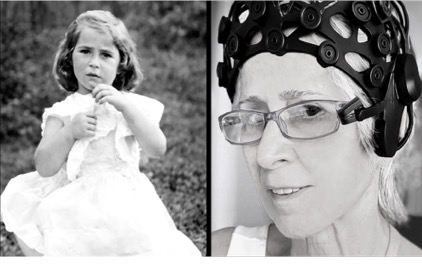
The idea of communicating art telepathically stayed with me until today, when I am still working on what I call Mind Art. A BCI–Brain Computer Interface cap (Fig. 2). allows me to experiment with my brain activity while visualizing it on the computer screen.
I had my first EEG (electroencephalogram) recording when I was a teen, and I was experiencing lots of headaches and had sensitivity to atmospheric changes. During the medical examination, I discovered that I could alter the results by moving, opening and closing my eyes, or swallowing saliva. The technician got annoyed with me because he had to do several recordings.
I got excited about the ability I had to manipulate the results. Later, I wanted to learn how to modulate my breathing through yoga to shape the lines of an EKG (electrocardiogram) recording. I also wondered how being afraid modifies the lines in the graphics. The scientists and the technicians found it difficult to relate to my curiosity about using EEG and EKG lines to create art. This play with the machine made me realize the power of imagination: the brain and its cognitive functions, the projection of thoughts, the role of fantasy. I later became familiar with imaginario, a Renaissance term, which underscored the mental power humans have to envision things that go beyond the knowledge they gather through sensory registers. I’ve always been keen on exploring the development of mentalities and the role of individual and collective consciousness in the formation of social representations of any kind.
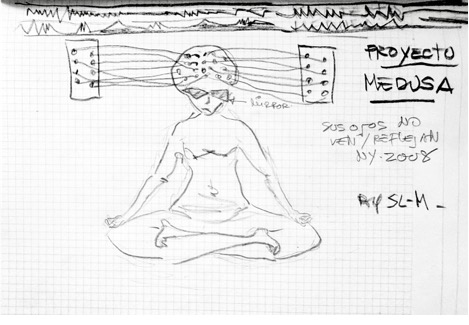
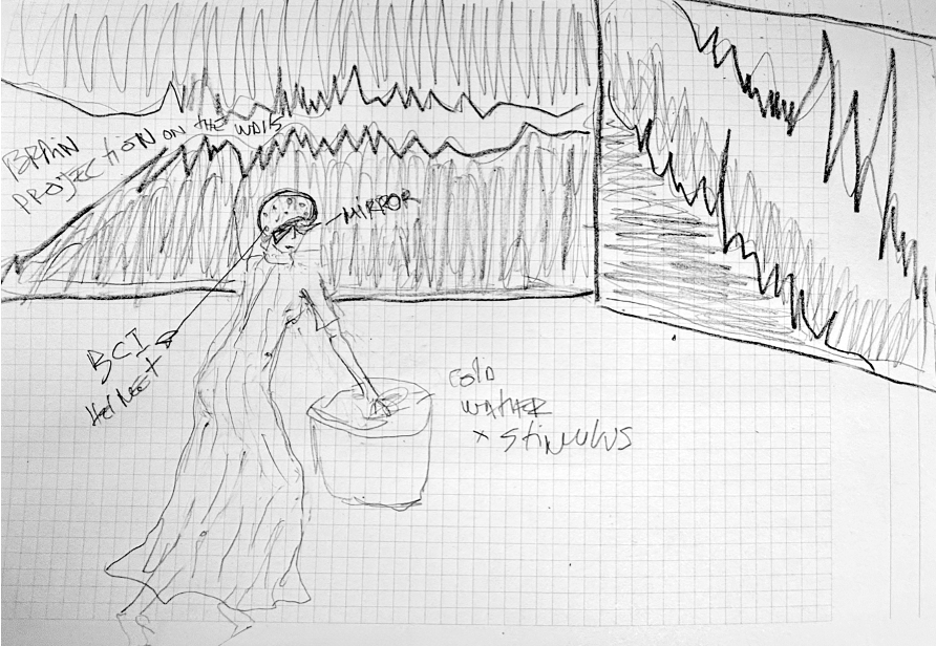
In 2008, I envisioned the Medusa Project (Figs. 3–4), a work inspired by neuroscientific experimentation and the idea that experiencing art can help us reinterpret the world by enabling us to become better aware of how we relate to different stimuli. In this work, each EEG signal channel of the BCI cap worn by the performer is connected through cords to the computer. The cords resemble the medusa tentacles and evoke the power of transforming others through technology. The medusa symbolizes hidden knowledge or truth. In this work, I imagined that the eyes of the performer would be covered by mirrors—they do not see, they reflect. I find that the pursuit of knowledge in neuroscience, which is now supported by AI technology, is comparable to the search for deeper truths in mythology.
CA: How did you return to your earlier interest in the relationship between the body and the mind at the time of your studies in the visual art program in Mexico City?
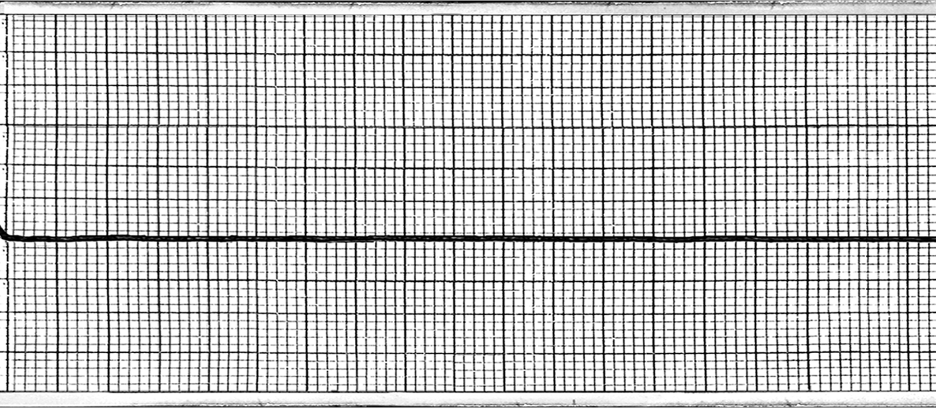
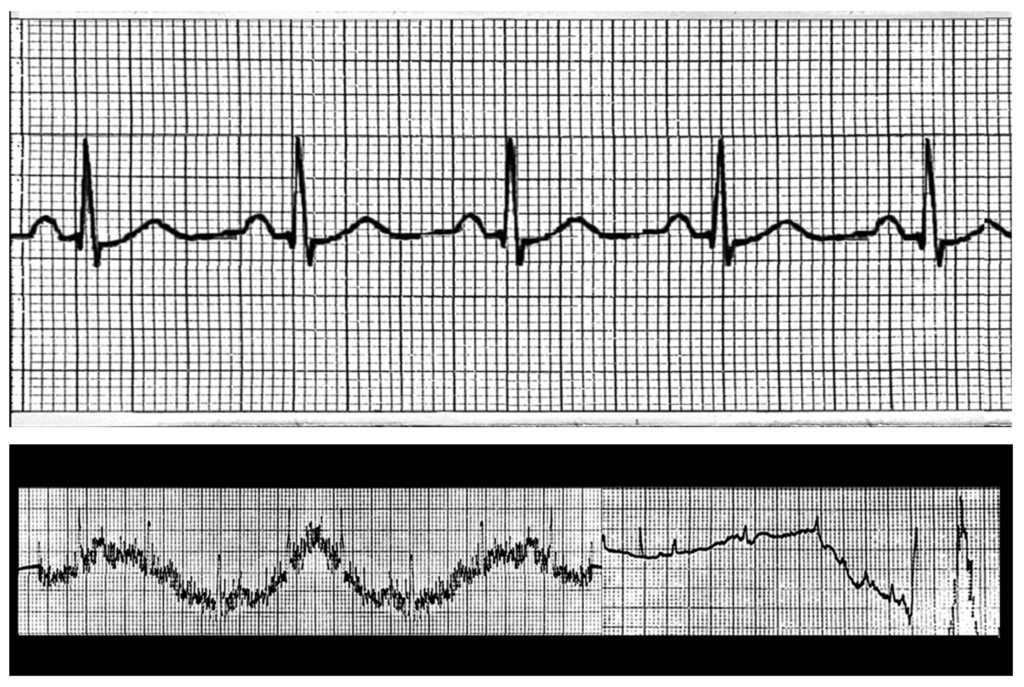
SLM: At the University of Mexico City, the curriculum required me to take at least three subjects in plastic arts to graduate. Following my intuition to explore other technologies that could serve as expressive media, I started going to the hospital of Mexico City to learn about the machines used for electroencephalograms and electrocardiograms. My curiosity caught the attention of some doctors, who allowed me to observe the passing of a patient who had suffered a heart attack. It was early morning when the patient died. When his heart stopped beating, the needle of the EKG machine continued burning the thermal paper in a straight line that seemed infinite. The cardiologist disconnected the machine from the body and gifted me the graph (Fig. 5).
It was a strange experience, as if I had been left with the death of that anonymous person in my hands. This experience showed me the new meaning of a line on paper, a line drawn with bodily energy. It made me see life reduced to lines, which, in this case, were ending their movement, their frequency, until all activity ceased, even that of the flesh that trembles by reflex. A dark silence arose as the line became monotonous. The needle burning the paper marked the final reading of this person’s life. This experience reinforced my dedication to becoming a conceptual artist. At that point, I knew that art is part of life, of concepts, of perception; it is a confrontation.
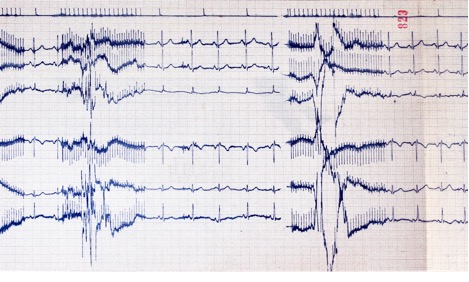
Everything changed at that moment. Drawing with medical technologies took on great meaning for me—the lines and their relationship with vital energy. I was studying Point and Line to Plane [published in 1926] by Wassily Kandinsky, so I thought of drawing with my bioenergy, the frequency of my heart, the oscillations of my breath, the movement of my body. I wanted to interfere with the continuity of the reading of life via EKG lines by introducing new rhythms into them. I also experimented with EEG lines.
In 1975, I was granted permission to experiment with biosignals in a medical laboratory at the university. Even though the scientists were puzzled by my inquiries, they supported me. I wanted to alter the natural rhythm and use the bioenergy of my body as an art tool. For my thesis exam, I demonstrated to my professors that I could draw in other ways. I could draw with my heart, not just with my hand and a pencil. I[5] could draw lines which conveyed the energy of my body and those lines had semiotic values. (Fig. 6) In recognition of the merit of my creative thought, I received the laureate thesis distinction for my dissertation “Ícono natural y proyectual” (“Natural Icon and Projected Icon”).
CA: This thesis research ultimately led to your video artwork In-Pulso (In Pulse) from 1978 (Figs. 7.1–7.3),which is presently in the collection of the Museum of Modern Art (MoMA) in New York City. Surprisingly, watching this work made me think of the statement by Jackson Pollock, that he could control the flow of the paint, even though it did not easily appear to be the case when contemplating the index of his gestural marks on canvas. Were you attempting to make a similar point about your cardiac rhythm and the conscious alteration of it? It looks like you were trying to bring down your heartbeat as much as possible. In addition to using your breath for this purpose, were you doing anything else? Were you thinking about anything specifically as your pulse was being recorded or did you attempt to let go of mental images in the process?
SLM: While connected to the EKG machine, I was using both my respiration and bodily motion to control the heartbeat. I also altered my intention to devise the meter, just as in music and poetry. In the In-Pulso video, you can see how I draw with the lines, how I paint by saturating the screen with my energy.
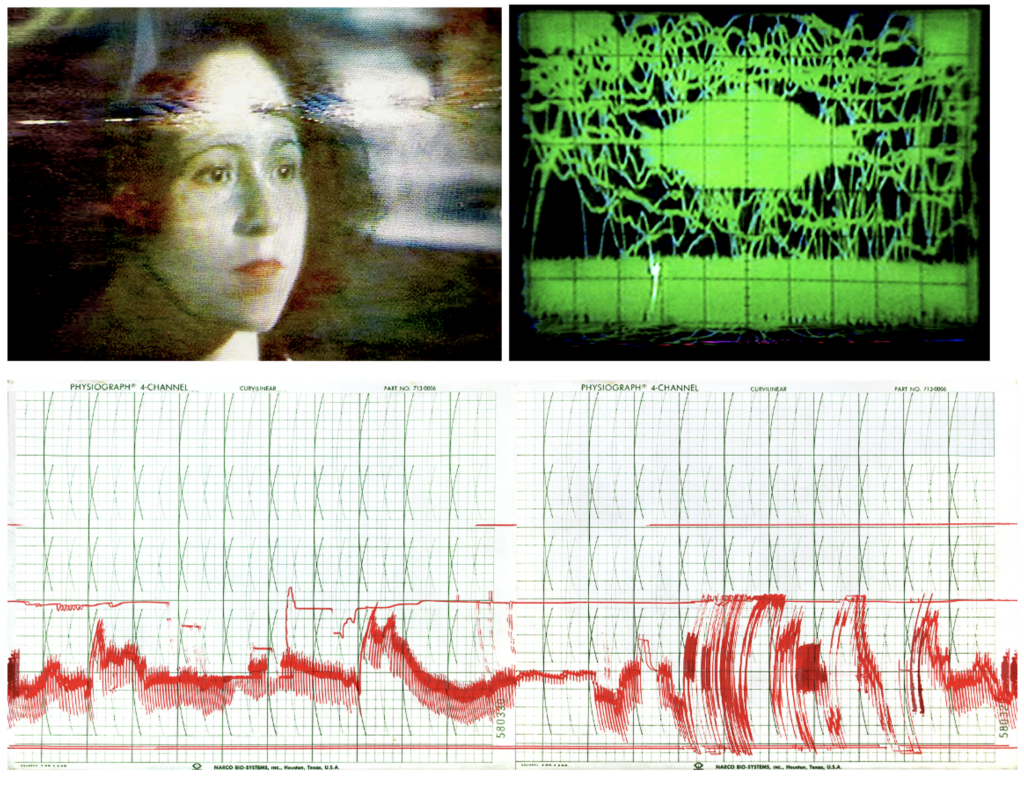
Fig. 7.3 (below). Sandra Llano-Mejía, electrocardiogram graphic from recording paper, 1978. The Museum of Modern Art, New York; Gift of the artist.
CA: There have been tremendous advances in Brain Computer Interfaces over the last twenty-five years. What have been some of your more recent experiments with brainwave signals? How are new technological devices helping you fulfill some of your early dreams about using this technology in alternative ways?
SLM:About fifteen years ago, I attended a conference lecture by Roberto Llinás. At the time, he was a professor at New York University (NYU) leading a neurobiology lab. I shared with him my dreams about telepathy art. He told me that he can make my childhood dream of transmitting art with my mind come true, and he put me in touch with other neuroscientists who facilitated my access to technology. Now I use BCI to project art from my mind to the screen, so that it can be seen by others. Through my thoughts, movements, responses to stimuli, and my relationship with people around me, I can control colors and moving abstract forms visible via the computer interface.
CA: At the risk of dwelling a bit too much on the distant past, I’d like to learn more about your broader views on technological devices and their impact on perception. At the end of the 1970s, you experimented both with Xerox technology and biosignal recording technology, considering the ways in which these apparatuses expand and constrain perspectives on selfhood. The prints and the installations from that period convey a broad array of emotions, some positive, others more ambivalent in character. Can you tell us more about your use of technology in these artworks?
SLM:Access to using Xerox machines was tightly regulated in Mexico during the 1970s. I really wanted to use this technology. It was a clandestine job to gain access to it. With a friend, I went to the room where they kept the Xerox machine at midnight and asked the security person to allow us to experiment with it. I was mostly trying to capture visually the movement of the body, the space and time of it (Fig. 8). The instant printing fascinated me. The photocopying process made me envision myself as the original and the photocopy as my shadow, a sort of replicant of me as the referent.
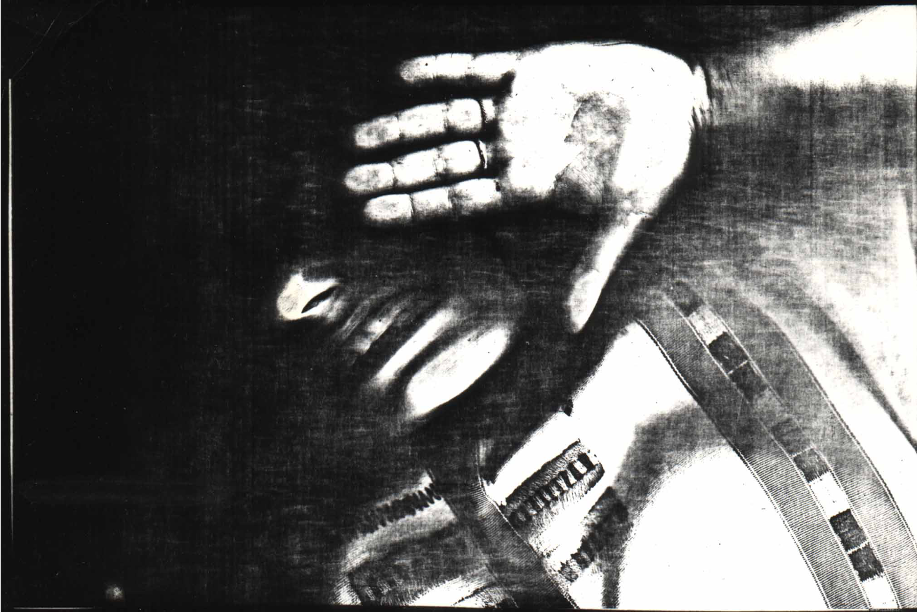
I have these memories from childhood of my mom taking photos with a Rolleiflex camera. The camera captured reality, so I wondered, why do I have to capture reality through drawing or painting if photography can do that? I did not want to pursue the path of traditional art. I sought to explore the complexities of selfhood, revealing both the potential and the limitations inherent in new technologies. In the installation De lo vidal a lo sensible (From the Vital to the Perceptible) (Figs. 9.1–9.3), I attached my electrocardiogram to the walls of Casa del Lago, a cultural center in Mexico City. The audience could follow its line throughout the building. I was attempting to immerse the visitors into my true inner life and make them aware of the fact that we share similar heartbeat patterns. Change is generally feared, but I embraced it. I purposefully altered the rhythm of my heart to create meaningful patterns. I enveloped the gallery inside and out in my EKG recording which became a sort of manifesto of life, time, and bioenergy at the intersection of art and technology.
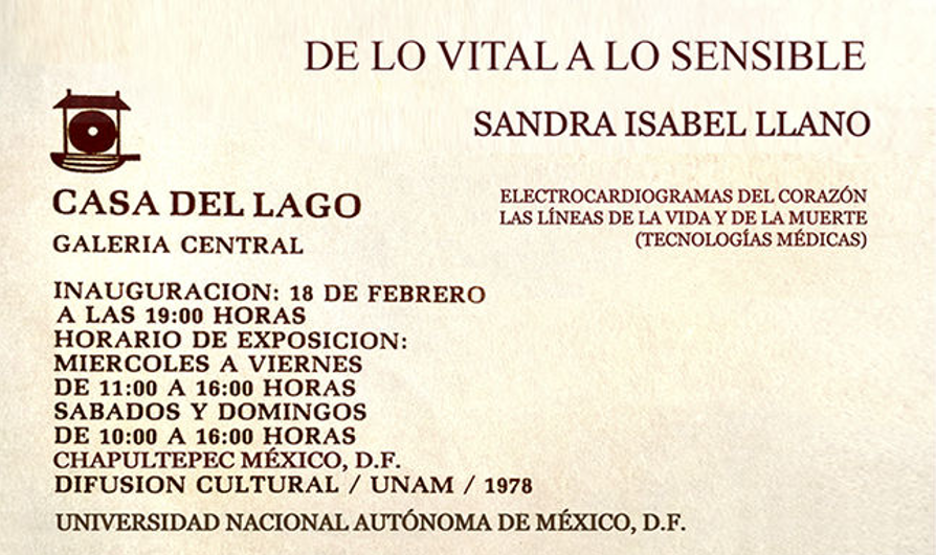
CA: What was your driving motivation for alternative uses of technological media?
SLM:My interest in the alternative uses of technological media stemmed from a desire to challenge conventional notions of identity and perception. I enjoy pushing the limits of technological media by going against their specifications. I have always wanted to resist determinism and discover other uses for technological devices. I have experimented with them to see how they affect my perception, my sensitivity, my body. By integrating new technologies into our lives, we are adding extensions that broaden our senses and expand our environment. As a result of this, we distance ourselves from other technologies, customs, and concepts. We cannot continue functioning with obsolete technologies.
CA: In the 1990s, you produced a series of works based on the scanning of three-dimensional objects. Quite a number of them build on themes of transience, decay, and mortality. How might technology, both old and new, relate to anxieties about aging and death?
SLM: I see mortality as part of an unavoidable process through which bodies, just like mechanisms, break apart as a result of aging and lack of care. I believe that mortality anxieties are greater in contemporary societies. Despite the inevitability of death, I have always wondered how to alter that final and absolute destiny, how to recreate an ant, how to stop movement so that life does not wear out. In my Death in May series (1990; Figs. 10.1–10.2) based on scanning technology, I tried to keep alive visually biological organisms that are unavoidably decaying. I created a box for the scanner and then put objects there. I put tomatillos, flowers, papers, soil, rotten food, real fish, etc. I also experimented with creating images of myself by using a big scanner. At one point, I inserted in it a bird that had died in front of me. The scanner is like the xerox machine—it’s just capturing more accurate details and enables me to experiment with even more positions.
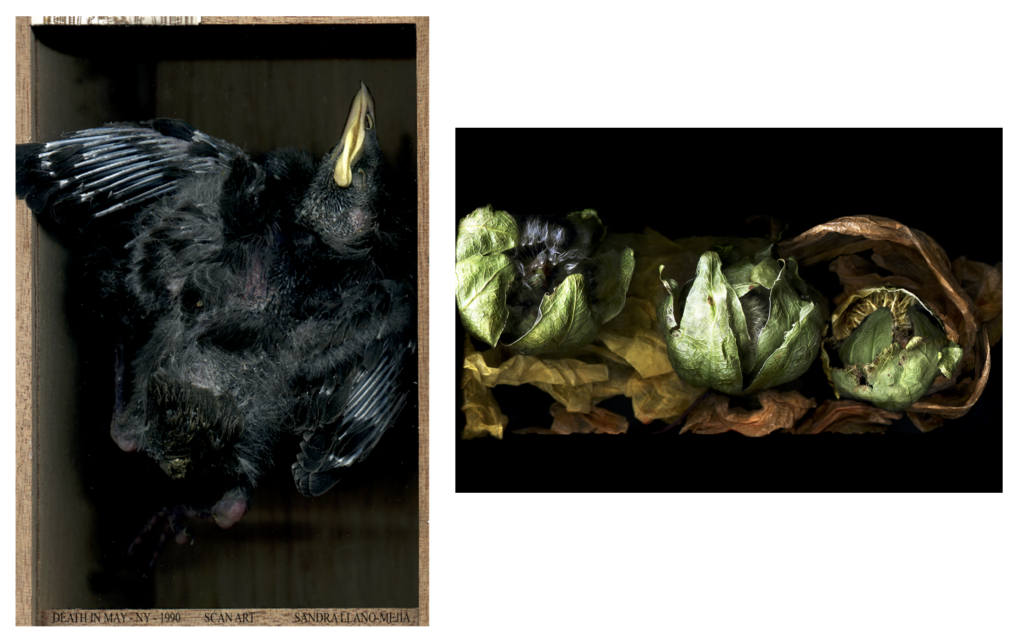
CA: What did your use of new media for expression reveal about the way technology impinges upon embodied perception and the function it might play not only in medical diagnosis but also in healing?
SLM:Art practices reveal how technology not only shapes self-perception but also influences the understanding of mental and physical states. Art by itself does not heal. Yet, therapy and art techniques can help with self-expression. Art experimentation with biosignal devices fosters self-discovery and highlights the interconnections between body and mind.
Talking about creation implies exploring the realms of the imaginary. It makes one consider the different ways consciousness represents or dreams the world into being, either directly, through reflection on sensory perception and experience in front of the object or, indirectly, through abstract thinking, imagining in the absence of the object. It is this absence that we seek to compensate for with words, as if to make up for the absence and render visible what cannot be seen at first glance: the hidden, even in images!
CA: Your works involving biosignals exude intimacy. They invite the public into spaces imbued with traces of your bodily sensations and thoughts not easily decodable yet eliciting a strong sense of affective connection. How did the public respond to your artworks? What kind of modes of engagement and interpersonal exchanges did they elicit? I am thinking here of the gift-giving act involved in the In-Pulso installation (1978).
SLM: By abandoning the traditional material attributes of art, which were most appreciated within the plastic arts, I placed audience members in front of various systems of signs, encouraging them to realize that reality can be represented in multiple ways.
In-Pulso (1978) is contingent on the relations between the machine, the physicist, the technician, the cameraman, and myself. Audience members bring their own experience to the work and can interpret it from different angles, as an “open artwork” in Umberto Eco’s terms. For the first display of In-Pulso at the Salón Atenas in Bogota, I had people put on electrodes and produce their own drawings. A doctor stopped by as I was preparing the exhibition and saw the heartbeat graphs. I asked the gallery staff to create an opening in a wall and place the monitor and the heartbeat graphic in it. The doctor was impressed with the exhibition and asked me if I wanted to use his EKG machine. I welcomed this opportunity and set the machine on a bench in the gallery.
At the exhibition opening, the first person to sit on the bench was Omar Rayo, a famous Colombian artist, who was known for his paintings with geometric lines. He had his electrocardiogram recorded and I gave it to him as an offering. In the museum, the EKG graph became a piece of art.
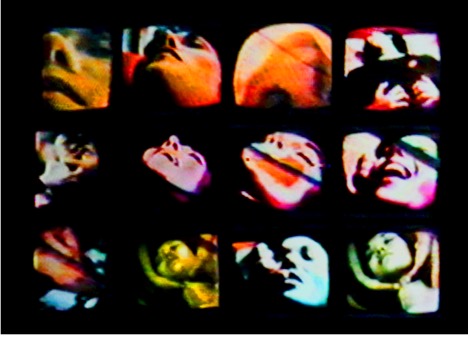
While experimenting with biosignal modulations in the 1970s, I gained an interest in the breath-based somatic therapy developed by the doctor and psychoanalyst Wilhelm Reich. He theorized that affective memories and traumatic experiences leave their imprint on both body and mind. He was accused of communism and eventually died in prison. I follow his ideas about “orgonic energy” and his suggestions that repressed emotions can be released through breathing patterns and visualizing exercises. This impacted my development of Acting-Out (Figs. 11–12), a video artwork which builds on techniques used in physiological therapy. I was interested in how one can capture emotions in images.
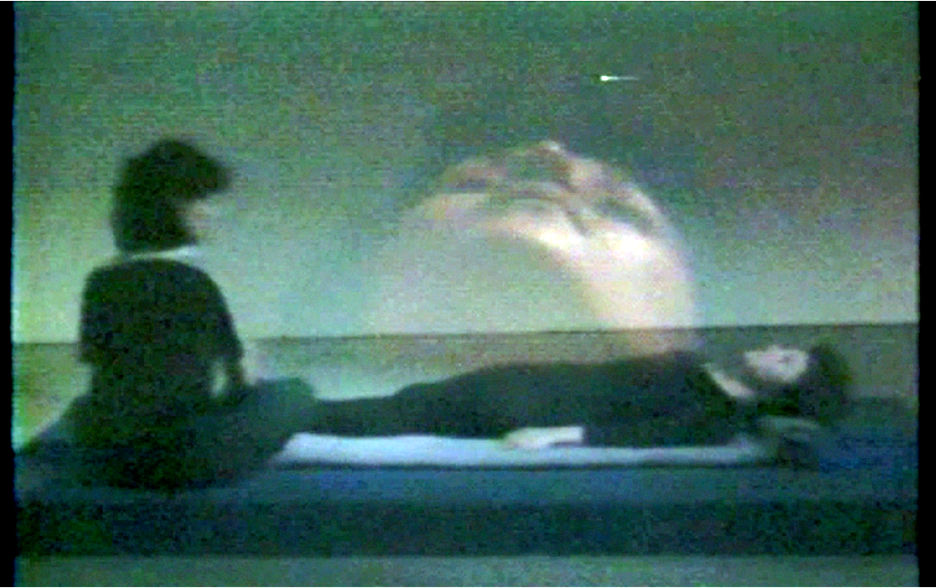
CA: Do you think your interest in this type of therapy had some correlation with the trauma you experienced yourself while living in Colombia?
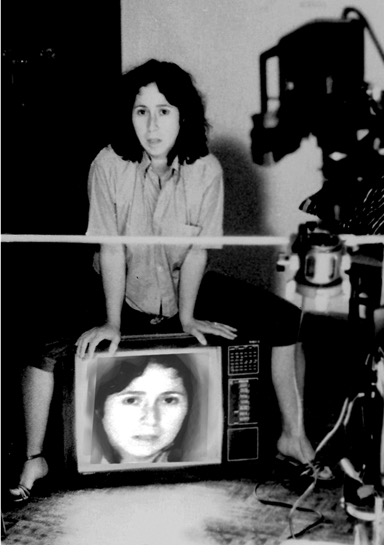
SLM: No, I experienced many struggles in my life, but I never wanted to attract pity or be perceived as a victim. Acting Out was entirely focused on the study of images one represses and the therapeutic ways in which one can gain liberation from them. The woman in the video is Patricia Salas, who was my classmate and volunteered to participate in the video.
CA:You also created “happenings” that called upon the public to complete the artworks. Tell us more about the voyeuristic implications of Vidarte: un Suceso (1979) (Figs. 13.1–13.4), and the public’s participatory engagement with this artwork. I’m curious how open participants were to embracing improvisation without necessarily being familiar with the happening concept.
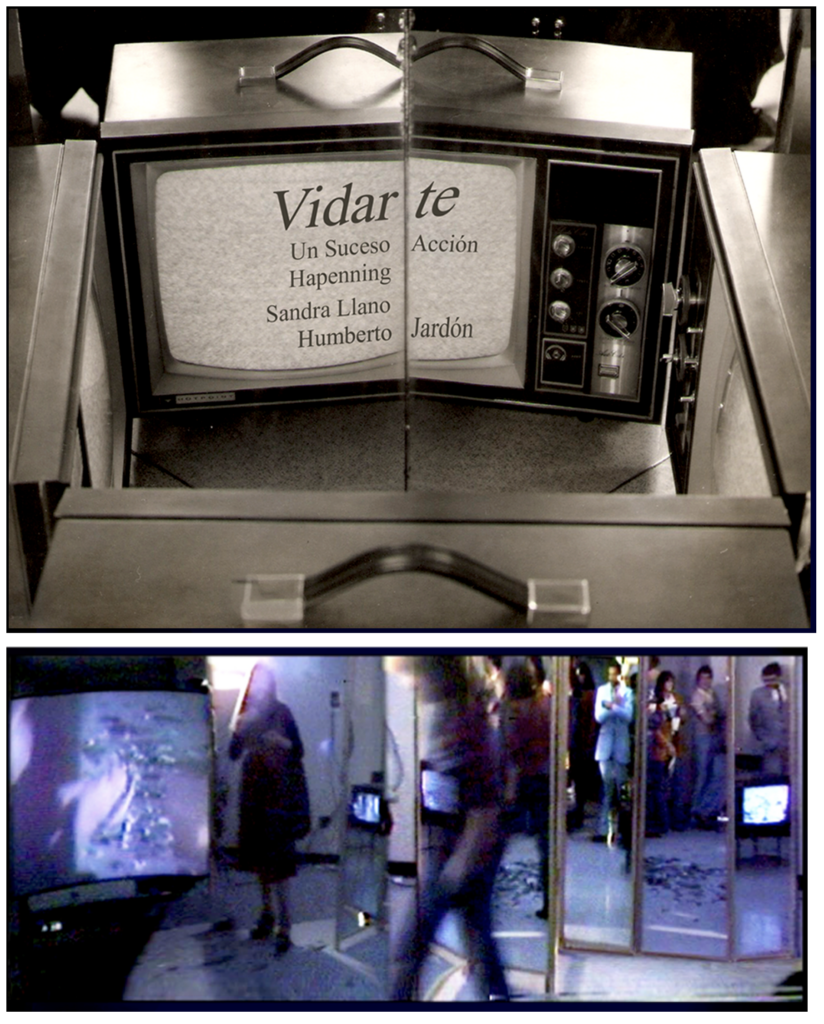
SLM: I staged Vidarte at the Instituto Nacional de Bellas Artes, a very glamorous Art Nouveau and neoclassical building in Mexico City. When people entered the exhibition space, they were filmed by several cameras. They also encountered monitors showing them the future through video images captured at the opposite end of the gallery. When visitors actually got to the other side—to their future—they encountered monitors showing them recordings of their entrance into the gallery—their recent past. I asked Sony for cameras, and they offered them to me. The camera people captured video images of visitors’ body parts, using the camera lens for studying their movements and gestures. The visitors didn’t know where the cameras were, so they could not perform for them.
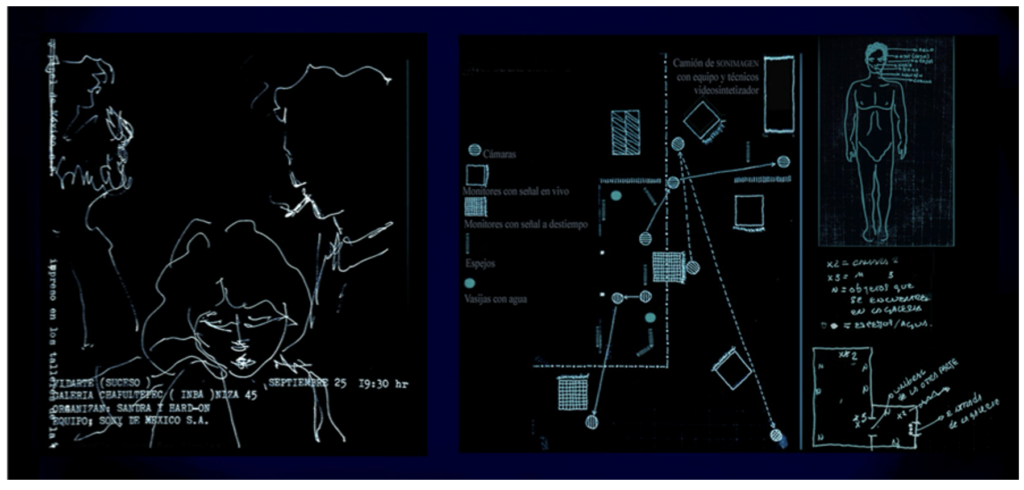
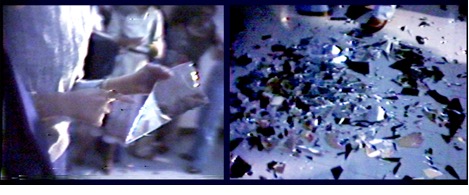
The gallery was also full of mirrors. At times, the video images were captured indirectly via the mirror interfaces. The sound was purposefully loud in the gallery to disorient people. This was a tactic of defamiliarization meant to enhance visitors’ sensory experience and help with the observation of their spontaneous behavior. The happening set the stage for the study of behavior. Some participants started breaking the mirrors in the gallery. I have no idea why. Then, they started putting water on top of the mirrors to eliminate bad energy because there are superstitions about broken mirrors in Mexico. Mostly young people engaged vivaciously. This was such a different experience from viewing traditional art.
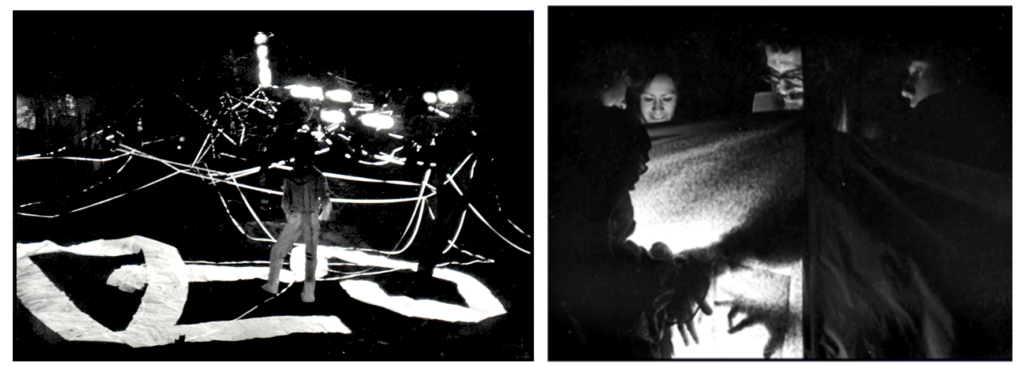
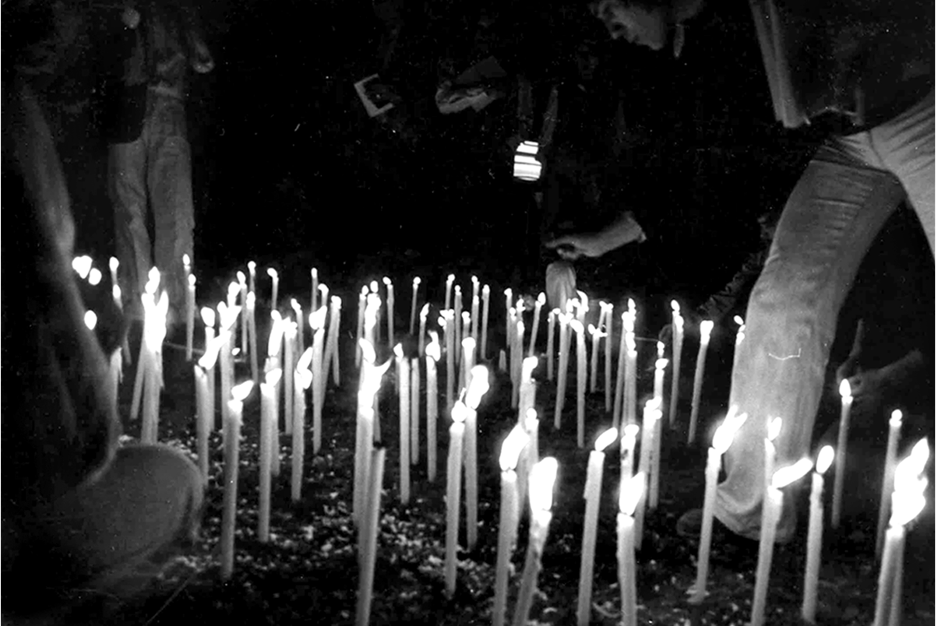
This happening followed the successful collaborative staging of another work, Intervalo Ritual (Figs. 14.1–14.2), which was organized in 1978 at the beautiful gardens of Chapultepec, close to the Museum of Modern Art of Mexico City. This happening enticed more people than I imagined. We installed paper labyrinths in the gardens and had lots of other playful elements with which participants could engage. At midnight, people were still there, we didn’t know what to do to put an end to the event. Intervalo Ritual was initially planned for one day but it ended up lasting three days.Art theorist Juan Acha assisted with the organization of this event.
CA: I am curious to learn more about how you came to teach epistemology in Mexico City. I’d also like to gain more insight into how your art practice has intersected with processes of knowledge formation.
SLM: I studied philosophy while also taking visual art courses, but I could not be awarded two BA degrees at the same time. In 1978, I taught science theory and epistemology courses for first year students at the Universidad Autónoma Metropolitana in Mexico City. Students were learning together how to conduct research and generate knowledge irrespective of their area of study. It was expected that they would work in interdisciplinary groups and implement their ideas in communities, helping impoverished social groups or Native communities. I was teaching students how to implement scientific methods. All this helped me tremendously in my own creative practice.
I’ve repeatedly returned to the relationship between artistic formation and knowledge production. I’ve been preoccupied with the intersections between cultural knowledge, artistic practices, and epistemological theories. I find that art practice offers alternative perspectives on knowledge production. Creative expression fosters emotional connections which destabilize the status quo and instigate critical engagement with conventional perspectives.
Artists’experiments with BCI can provide insights into the role of experiential knowledge —knowledge gained through embodied experience as individuals interact with their environments while utilizing BCI technologies. This offers an alternative to traditional epistemological frameworks, which often prioritize propositional knowledge over experiential learning. I strongly believe that artistic research at the intersection of cognitive sciences, philosophy, and neurotechnology studies can deepen our understanding of how emerging technologies impact the ways we form, validate, and conceptualize knowledge.
CA: Were there more long-term collaborations you established with scientists or physicians while developing works involving biosignals? How did you find your allies beyond the art world?
SLM: When I started working at Mexico University in 1978, I met a physician who was very timid and was spending so much time in the lab that it was a second home for him. I was enchanted with the biosignal recording devices he was using and I convinced him to allow me to do a video recording in the lab.I did not have access to video cameras myself, so I went to the communications lab where they had all the video recording equipment needed. I found a cameraman who helped me with documenting the EKG recording conducted by the physician. Upon completing that work, I felt I had accomplished something significant.
I did not see that physician again, but I had long-term collaborations with people in the communication department. Some of them were helpful, whereas others tried to sabotage me because they perceived me as an intruder trying to change Mexican art. They claimed they had lost some of the video recordings for my projects. Most art critics in Mexico were also resistant to change in the 1970s. Lots of them were only supportive of commercial art and had no interest in experimental art.
CA: Your pioneering contributions to experimental art came to be acknowledged both in Colombia in the late 1970s (4th Salón Atenas, Museo de Arte Moderno de Bogotá, 1978) and in the US in the early 1980s (Video from Latin America,MoMA, 1981). Did you note any differences in terms of responses to your practice in these different cultural contexts?
SLM: The responses in the US and Colombia were indeed different, but my creative practice did not ultimately receive extensive attention in either of these contexts. What I was doing was not common. Nowadays, my work is garnering more attention in Colombia, but there my practice is presently studied as a thing of the past.
At MoMA, my work was displayed in an exhibition context which emphasized the political implications of video art. But my work did not have that as a primary focus. In the early 1980s, there was a temporary opening towards showing art from Latin America in the US. My art was different from what most curators sought to feature when focusing on Latin America—it was more poetic than political. Eduardo Serrano, curator of the Museo de Arte Moderno de Bogotá, and Juan Acha, recommended my work at the same time. It was featured in Video from Latin America, curated by Barbara London at MoMA in 1981, for the fiftieth anniversary of the museum.
Professor Juan Acha introduced my work to American curators. I was proud of showing In-Pulso in New York. The work was not immediately acquired for MoMA’s collection. There was not much institutional focus on the actual content of my work and its relationship to bioenergy. I felt that by associating artworks with a particular political message, for instance, acts of resistance against dictatorships in Latin America, critics and curators were restricting the relevance of art to a particular time, such as the 1970s. I felt that I would compromise the content of my work if I were to limit its message to politics. I was and continue to be unwilling to do that. I support resistance to dictatorial regimes, but I do not make my art a tool for that.
CA: In the 1980s, you collaboratively created music performances (e.g. Piano Experimental, 1985, and Música Imitada, 1986). What were the conceptual stakes you were pursuing through this? How did the interplay of visual and musical elements impact your thinking about bodily energy and feedback circuits in art?
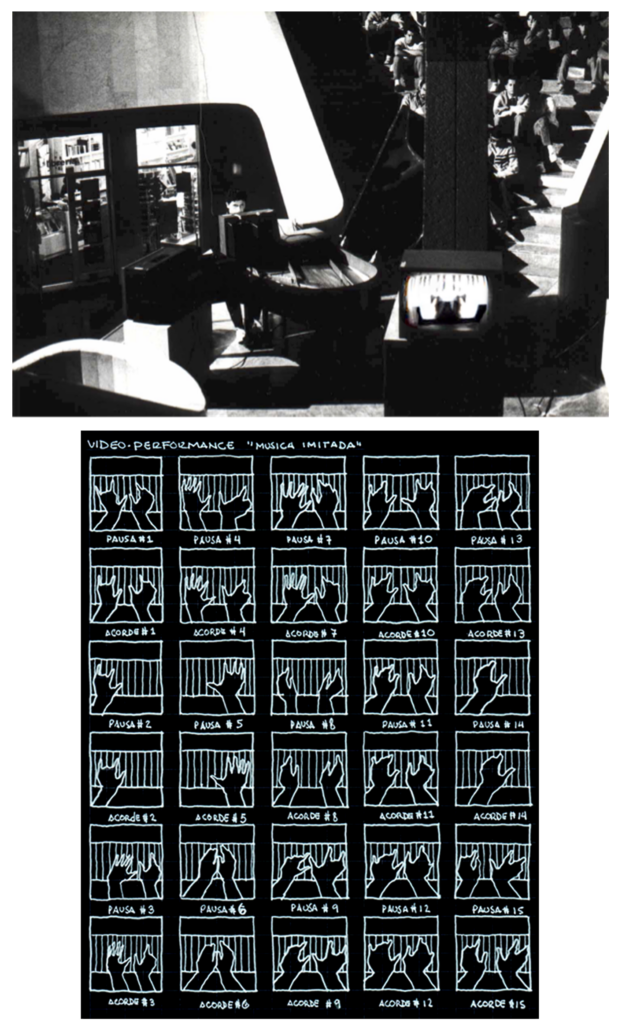
SLM: I was interested in the relationship of biosignal lines with the grid in music and the meter in poetry. I was transcribing poetry with my heart rhythms. In Piano Experimental (Fig. 16), musician Rafael Mejía interprets my electrocardiogram graph as a score. I wanted to show the interplay of the rhythm of art and life. The oscillations in my heartbeat and breathing patterns served as notes. There was poetry in every movement as the pages of the graph turned. It was a beautiful performance.
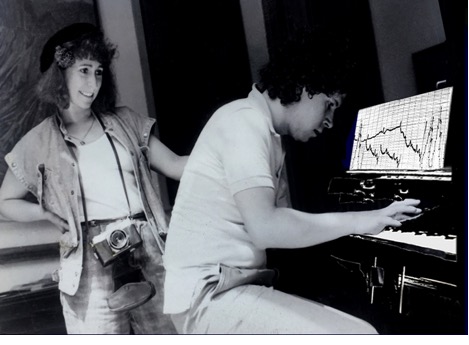
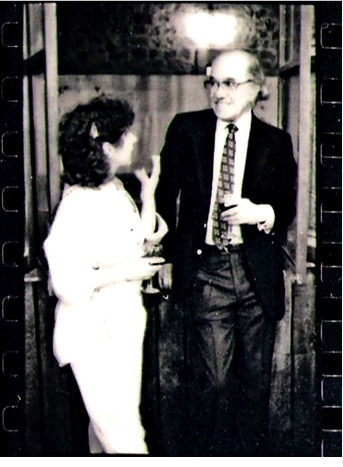
Música Imitada (see Figs. 18.1–18.2), which was performed at the Museum of Modern Art in Mexico City, engaged with the subjective experience of time. Musician Rafael Mejía used as a score a videorecording of a piano performance. He emulated the hand movements he saw on the screen and attempted to produce the very same sounds. Four other video monitors offered a further mise-en-abyme of the composition, including recordings with rearrangements of sounds. The director of the museum was hesitant about showing his commitment to experimental work. He feared that the event would not be positively received and sent other museum representatives to attend it. I had very little institutional support for organizing the performance. After its successful staging, the museum sent us a letter praising its impact. It stated that it was the best event of the year. Juan Acha assisted with this event too (Fig. 17).
There were inevitable delays and pauses as the live musical performance and the recordings in Música Imitada unfolded. The varying intervals created disruption, compelling audience members to confront moments of stillness or absence and prompting them to consider the significance of what is happening during those pauses. Discontinuities suggested that the space between actions can be just as meaningful as the actions themselves.
CA: I know you were familiar with John Cage’s ideas about randomness and process-oriented art pieces. You certainly engaged with these notions in Música Imitada,too. Were you in conversation with other artists staging happenings at the time?
SLM: From a distance, I closely followed what was taking place in the US with happenings. I consulted American art magazines distributed in Mexico City. They were expensive, so I often went to bookstores and read them there.
CA: Mirroring acts and interferences are part and parcel of your aesthetic vocabulary. Why do you think we might need to rely on both reflective and disruptive processes in order to enhance self-consciousness?
SLM: When you create art, you disrupt the order of things and concepts. Disruptions are beneficial not only in art but also in science and technology. The only way to advance, to create a change in history, is through rupture and reflection.[6] This enriches humanity by plunging us into another dimension of existence.
CA: I’m interested in learning more about the feminist implications of your creative practice. There are oblique references to this in your early work pertaining to gestural language and biosignal communication, which stand out as alternatives to dominant patriarchal codes embedded in verbal communication. I think there is something to be said about the fact that you are contradicting the notion that women cannot control their emotions by showing how you can model your heartbeat in In-Pulso.
The work certainly lacks an overt message about this, but I cannot help but feel it entails an invitation to consider such meaningful correlations. It also counteracts the patriarchal view that women’s artmaking evolves out of intuitive or spontaneous expression rather than conscious, purposeful expression. More recently, you seem to engage with feminist concerns more blatantly. I am thinking here of your works included in the Frequencia Domestica (Domestic Frequency) exhibition shown at the Instituto de Visión in Bogotá in 2017. Could you share more information about the works you presented there and how they might relate to feminist concerns?
SLM: To be perfectly honest, I was not fond of that exhibition title, “Frequencia Domestica.” My art was never limited to a particular representation of gender or to certain political views. Most likely, the curator’s title choice was ironic, mocking the expectation that all women artists’ works carry the imprint of domestic life rituals.
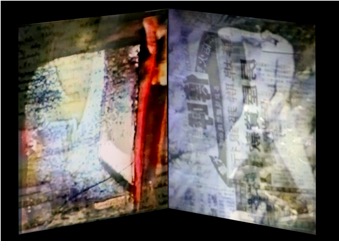
For this exhibition, I presented images from the Xerox series, video works, and sculpted books. I displayed my Video-Book installation (1989) (Figs. 19.1–19.2), which pairs two vertically oriented monitors resembling the pages of an electronic book. There were no commercially available e-readers at that time. The monitors display a poetic collage of TV images, musical effects created by Rafael Mejìa, words, and noises I selected myself. I´ve never established my work as a woman, but as a person, a human being. I support all kinds of movements of liberation that pose resistance to authoritarianism. My work has never been circumscribed to a certain ideology. I embrace the element of plurality in art. I rejoice at the thought of multiple interpretations of my work based on audience members’ differing perspectives.
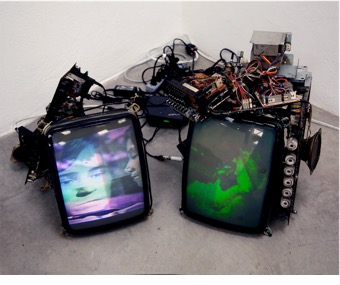
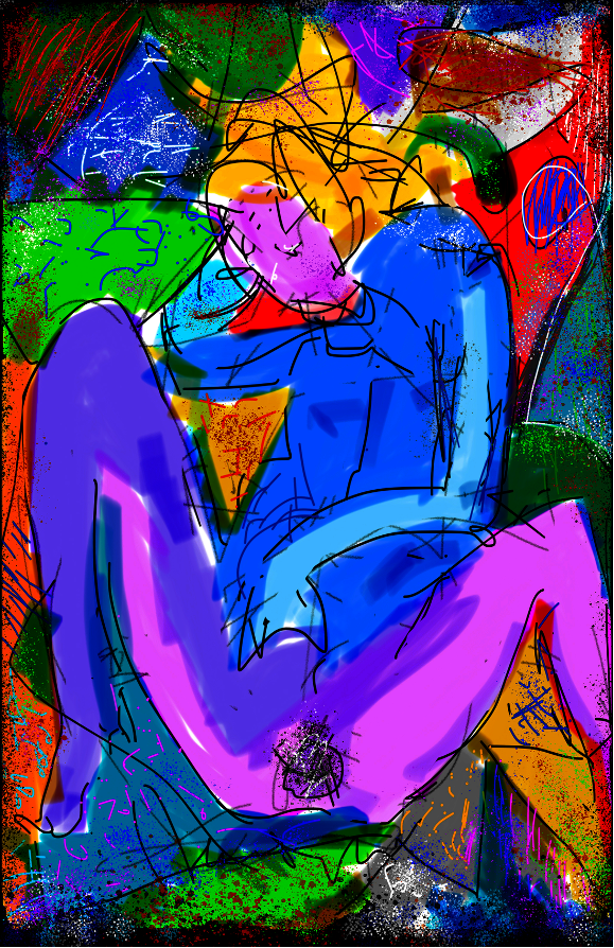
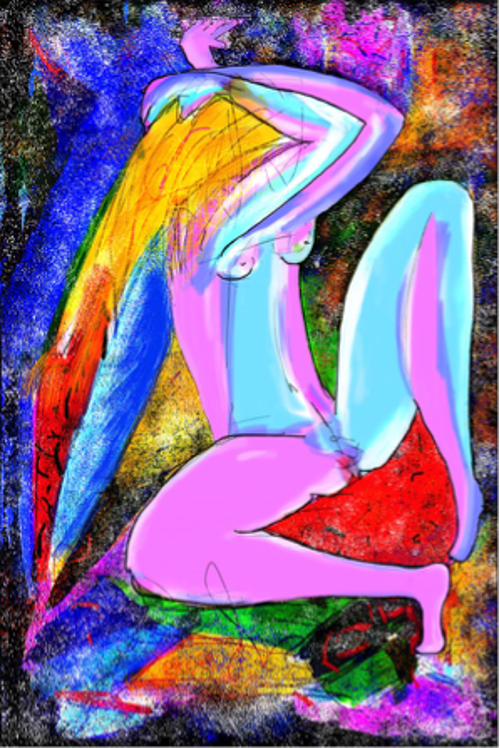
During the COVID pandemic, I did create a series of works that more explicitly engages with feminist concerns such as the abuse of women. It’s called Broken Women (Figs. 20.1–20.2), and it features painterly images created with my finger in the Notes application on my iPhone. I simply use the settings available and apply pressure to the screen with my finger. Each image of a woman is created out of one line only. I make do with what I have; I do not use any additional programs. This creative process made me think of the primitive times when people were painting with their fingers on cave walls. The house became my cave during the COVID pandemic. I printed some of the images of Broken Women on metallic paper.
CA: A significant number of your works entail the use of time-based media. In a recent artist statement, you mentioned that you are interested in non-timed time, in intervals and discontinuity. How does your practice make such an experience of time evident and why is it important to account for it?
SLM: Since my first experimental use of the Xerox machine to create art, I was attempting to create disruption through gesture, sign, symbol. Stopping the World (see Fig. 8)is an embodiment of that. So is the video work Self-Portrait in Four Times (Fig. 21.1 and 21.2) in which images of myself recorded with four cameras in a studio are shown across four screens. They refer to four different stages or phases of myself. Images appear to disintegrate in one video channel only to reappear in the next instant or, simultaneously, in another channel, recovered by light and invocation. The apparent symmetry evokes the illusion of totality in the four videos, pointing to open time rather than suggesting a closed set. The visual mutations in the work conjure up a dynamic, spatial present.
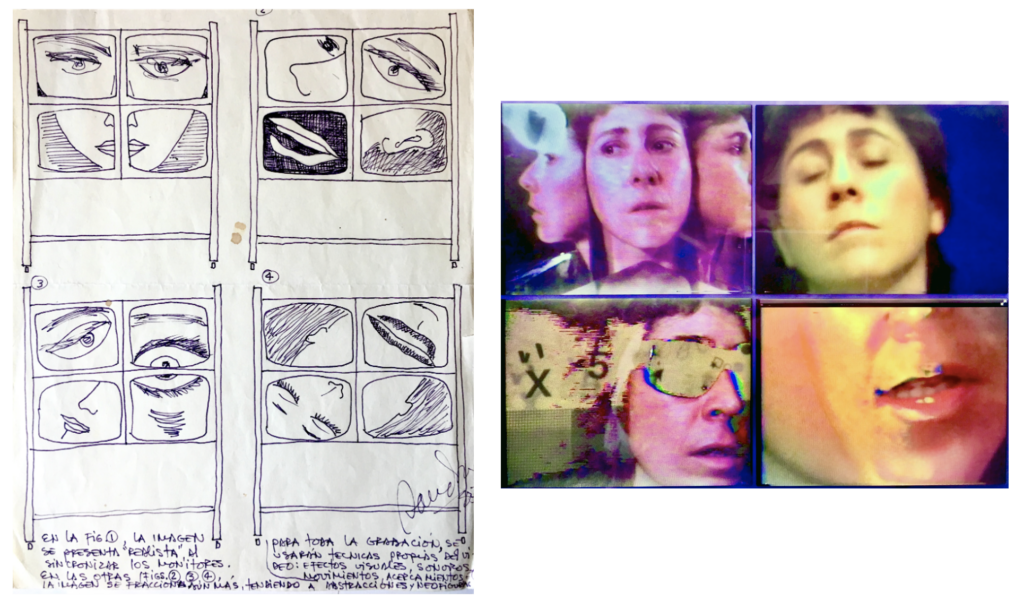
Fig. 21.2. Sandra Llano-Mejía, still from Self-Portrait in Four Times, video, 1985–2017. Collection of the artist.
While I was working on this four-channel video, I also created a Self-Portrait in Four Times on paper (see Fig. 1) based on photocopies of four self-portraits representing various ages. I cut each image into four and assembled faces with different parts corresponding to different temporalities. For me, the photocopies played the role of shadows of the portrait. Through the visible construction of disparate parts placed at different angles, two-dimensionality is broken and the portrait projects into space.
In my creative work, I always seek to highlight the role of pauses or intervals because continuity is a perceptual illusion. Hence, you will note in my works visual elements suggestive of cracks, breaks, fissures, fraying, hollowness. They correspond to silences, insomnias, dissonances. Such intervals break linear time and generate subjective reflection on its unfolding.
In Intervalo Ritual (Fig. 22; 1978), the participants and I tried to recover the feeling of being involved in collective creative practices, like those characteristic of archaic communities that stage agrarian celebrations, perform initiatory rites, and organize popular festivals. I wanted to emphasize the ephemerality of gesture and the communal engagement in art-life rituals. I wanted participants to experience time in a variety of ways rather than strictly chronologically. The ephemeral gestures of the participants become part of the work.
Visual technologies, such as photography and cinema, have given us the impression that we can capture time and manipulate it. Through my performative works, I strive to interfere with the bracketing of time in order to instigate an awareness of varying rhythms of experience.
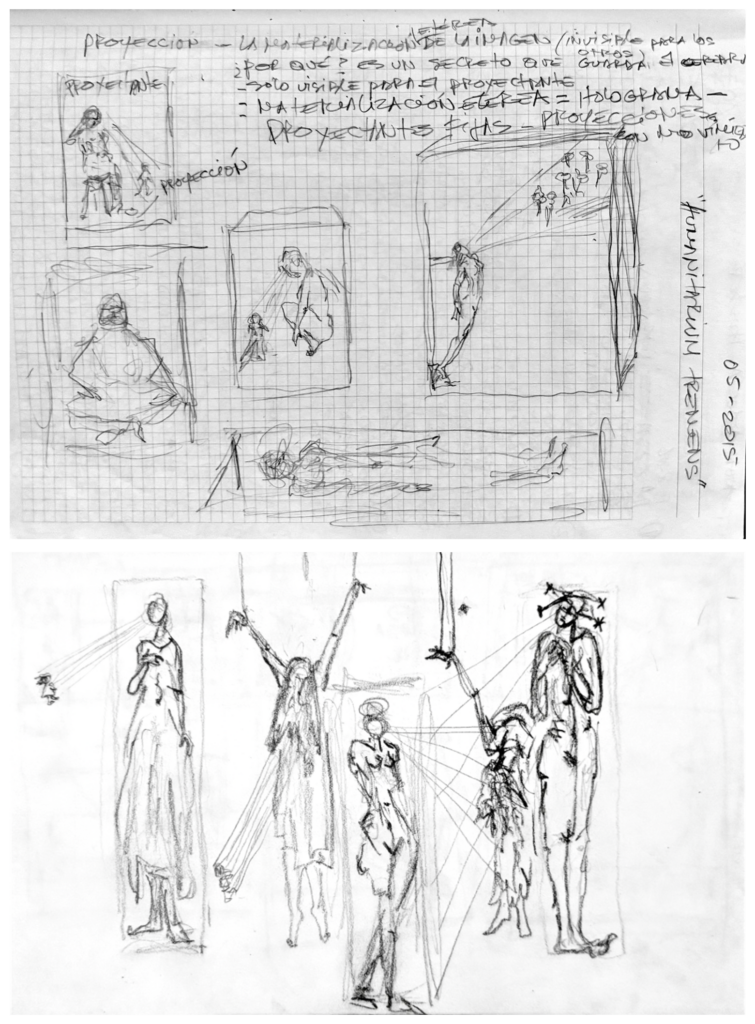
In the Humanitarium Tremens project (Figs. 23.1–23.2), conceptualized in 2015, I tried to capture time through repeated projections of a recorded event. I wanted to point to the inaccessibility of mental pictures that remain in the brain. The image in this installation is kept a secret, visible only to the projector. I was considering how I could use holograms to create an ethereal materialization of time. The idea for this project started with observations I made on the New York City subway. I have often encountered people who are talking to themselves, arguing with someone in the corner of the car, or staring at the floor. Sometimes, it’s as if they are contemplating a projection only they can see and interact with. Maybe stress in the city contributes to this. I find this intriguing! I have photographed many such subjects throughout the years. A few of them even repeat the same rituals.
CA: You are currently working on a book. I’d love to hear more about it and how it ties in with your aesthetic and epistemological inquiries.
SLM: My book centers on how I maintained my independence as an artist by staying away from the understanding of art in terms of decoration or marketable objects, which respond to pre-existing needs and suppress personal expression. It is about placing art alongside science and technology in the same field of knowledge creation.
BCI technology is very expensive, and I have no support for experimenting with it. Right now, I am working on training my brain the same way I was training my heart. I want to manipulate the alpha and gamma waves, not just have brainwaves recorded. I am coming full circle. While working with this up-to-date technology for brain inquiry, I am returning to the idea I started with when I was considering the possibility of telepathic art as a four or five-year-old kid.
At the time, I used to go to the park near my house and chat with elderly men who were spending a lot of time there. I would share with them my idea about telepathic art. Taking me in jest, they would send me home to sit in front of a light bulb and try to turn it on through my mental concentration. As a kid, I practiced this for a long time. About five years ago, I bought a BCI computer program which came along with an EEG helmet. One of the exercises proposed for working with it was precisely turning on a light bulb by modulating brainwave oscillations through pure concentration. I did it! It didn’t matter how many decades had passed!